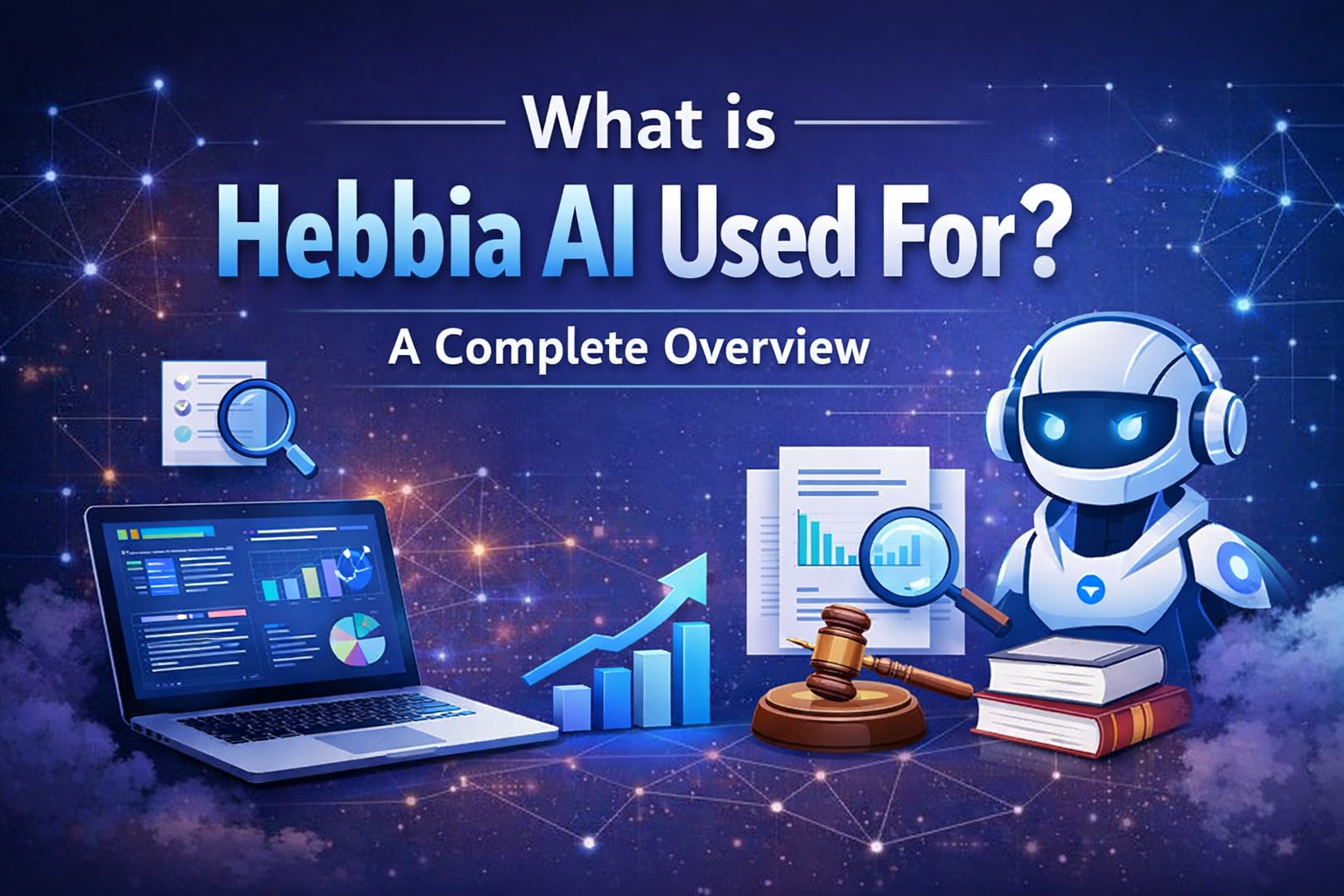
Hebbia AI is an advanced artificial intelligence platform designed to transform how people search, analyze, and interact with large volumes of data.
At its core, it functions like a smart search engine for complex documents, enabling users to ask natural language questions and receive precise, context-aware answers.
Instead of manually scanning hundreds of pages, users can rely on Hebbia AI to extract relevant insights within seconds.
This is one of the key reasons people ask, What is Hebbia AI used for?—it simplifies research that would otherwise take hours or even days.
The platform was founded with the goal of improving knowledge work, particularly in industries that deal with massive datasets such as finance, law, and consulting.
Hebbia AI gained attention for its ability to process unstructured data—like PDFs, reports, and contracts—at scale.
With the rise of big data (over 120 zettabytes of data are expected globally by 2025), traditional tools have struggled to keep up.
Hebbia AI was built to bridge this gap by combining machine learning with powerful search capabilities.
Today, businesses are rapidly adopting AI-powered search tools because efficiency and speed are critical in competitive markets.
Studies show that employees spend nearly 20–30% of their time searching for information. Tools like Hebbia AI significantly reduce this time, allowing professionals to focus on decision-making rather than data gathering.
This directly answers the question, What is Hebbia AI used for?—it helps organizations unlock insights faster and improve productivity.
The core purpose of Hebbia AI is to make complex data accessible and actionable. Whether it’s analyzing financial reports, reviewing legal documents, or extracting insights from research papers, the platform enables smarter, data-driven decisions.
In simple terms, What is Hebbia AI used for? It is used to turn overwhelming amounts of information into clear, usable knowledge—quickly and accurately.
More Read: What is LevelFields AI? A Complete Beginner’s Guide
How Hebbia AI Works Behind the Scenes
Hebbia AI is built on a strong foundation of artificial intelligence and machine learning, which allows it to continuously learn from data and improve its performance over time.
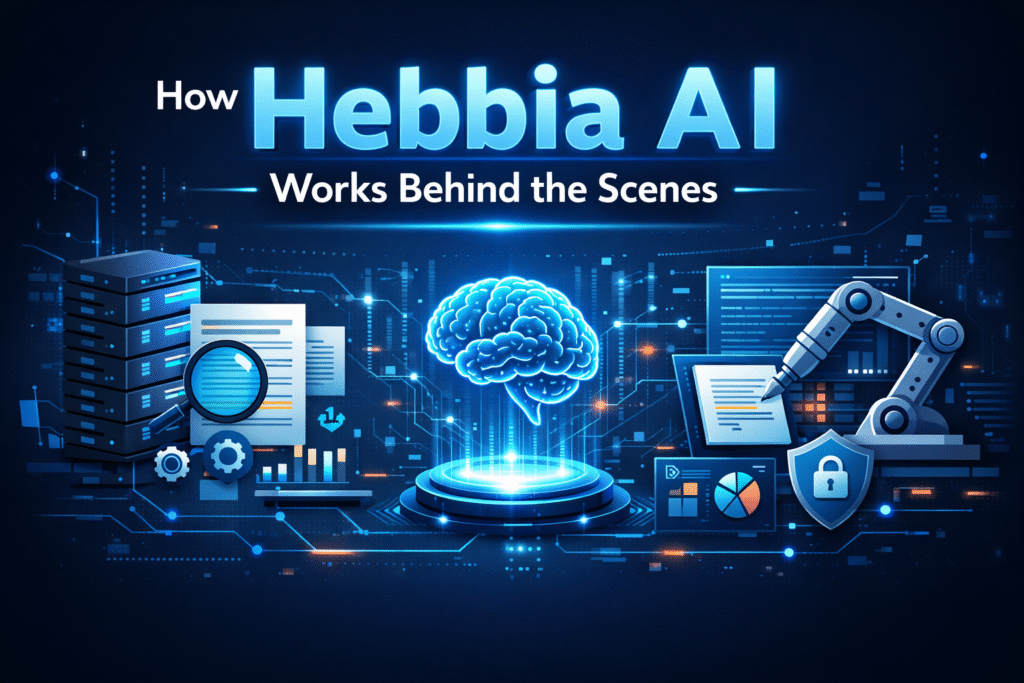
Unlike traditional software that follows fixed rules, Hebbia AI uses advanced algorithms to understand patterns, relationships, and context within large datasets.
This makes it highly effective in handling unstructured data such as reports, contracts, and research documents.
When people ask, What is Hebbia AI used for?, one major answer lies in its ability to analyze complex information quickly and accurately using machine learning models trained on vast amounts of data.
A key component of this system is Natural Language Processing (NLP). NLP enables Hebbia AI to understand human language in a way that feels intuitive.
Users can type questions in plain English—just like they would ask a colleague—and the system interprets intent, context, and meaning.
For example, instead of searching with keywords like “revenue growth 2023,” a user can ask, “What were the main drivers of revenue growth in 2023?” and get a direct answer.
This highlights What is Hebbia AI used for?—making data interaction more natural and user-friendly.
Another important aspect is its search-based interface, which differs significantly from traditional tools. Traditional search engines rely heavily on keywords and often return long lists of links, leaving users to dig through results.
In contrast, Hebbia AI provides structured, context-rich answers by scanning multiple documents simultaneously.
This reduces manual effort and improves accuracy, which is why many professionals are shifting toward AI-powered search solutions.
Behind the scenes, Hebbia AI uses sophisticated data indexing and retrieval processes. It organizes massive datasets into searchable formats, allowing instant access to relevant information.
Instead of scanning files one by one, the system retrieves insights across thousands of documents in seconds.
This efficiency clearly demonstrates What is Hebbia AI used for?—helping users find precise information faster, smarter, and with far less effort.
More Read: Is Roadtrippers free? A complete guide for new users
Key Features That Define Hebbia AI
One of the most powerful capabilities of Hebbia AI is its intelligent document search, which goes far beyond simple keyword matching.
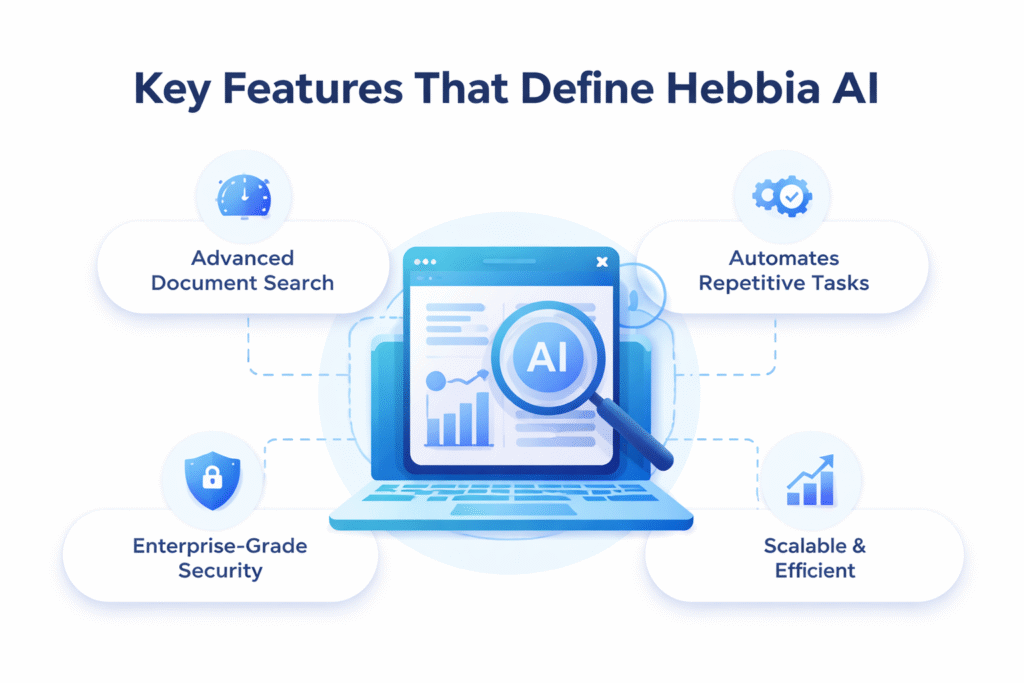
Instead of just locating words, it understands the meaning behind queries and scans entire documents to find the most relevant information.
For example, a financial analyst can upload hundreds of earnings reports and instantly extract key metrics without manually reading each file.
This highlights What is Hebbia AI used for?—to dramatically reduce the time spent searching through complex documents.
Another standout feature is its ability to deliver context-aware answers. Hebbia AI doesn’t just pull isolated data points; it understands the context in which information appears. This means users get more accurate and meaningful responses.
For instance, when reviewing a legal contract, the platform can identify clauses, risks, and obligations while considering the surrounding text.
This level of understanding answers the common question, What is Hebbia AI used for?—it’s used to interpret information, not just retrieve it.
Hebbia AI is also designed for large dataset processing, which is critical in today’s data-driven world. Organizations deal with terabytes of structured and unstructured data daily, and traditional tools often struggle at this scale.
Hebbia AI can process thousands of documents simultaneously, making it ideal for industries like finance, consulting, and healthcare.
Studies suggest that over 80% of enterprise data is unstructured, and tools like Hebbia AI are essential to unlocking its value.
In addition, the platform enables real-time insights generation. Instead of waiting hours or days for analysis, users can get instant answers and summaries, allowing faster decision-making.
This is especially useful in high-stakes environments like investment research or risk assessment.
Finally, Hebbia AI integrates seamlessly with enterprise systems, such as internal databases and document management platforms.
This ensures that organizations can use their existing data without disruption. Altogether, these features clearly explain What is Hebbia AI used for?—it is used to turn massive, complex data into actionable insights quickly, accurately, and efficiently.
More Read: Is it Bettina or Betina? The Correct Spelling Explained
What is Hebbia AI used for? in Financial Research
Hebbia AI is transforming how financial professionals work by streamlining complex tasks like investment analysis and modeling.
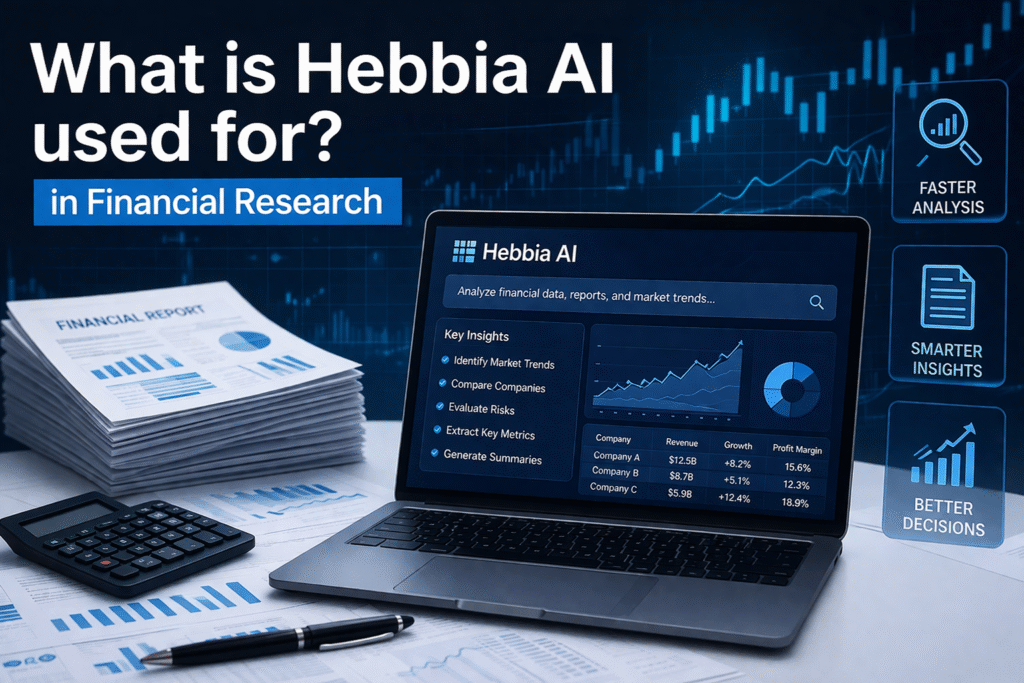
Traditionally, analysts spend hours reviewing financial statements, earnings reports, and market data to build models. With Hebbia AI, this process becomes significantly faster and more accurate.
The platform can scan multiple documents at once, extract key financial metrics, and highlight trends, helping analysts make informed decisions in less time.
This clearly answers What is Hebbia AI used for?—it is used to simplify and accelerate data-heavy financial analysis.
Another major application is market research automation. Financial markets generate massive amounts of data daily, from company filings to economic reports.
According to industry estimates, over 10,000 corporate reports are published globally every day.
Hebbia AI can process this information in seconds, identifying relevant insights and summarizing key findings.
Instead of manually sorting through endless documents, professionals can focus on strategy and decision-making. This is a practical example of What is Hebbia AI used for?—automating repetitive research tasks to improve efficiency.
Due diligence is another area where Hebbia AI delivers strong value. In mergers, acquisitions, or investment evaluations, analysts must review extensive documentation, including contracts, risk disclosures, and historical performance data.
This process can take weeks using traditional methods. Hebbia AI accelerates due diligence by quickly identifying risks, inconsistencies, and critical information across large datasets.
This not only saves time but also reduces the chances of human error.
Finally, Hebbia AI plays a key role in portfolio insights generation. Investors need continuous updates on their portfolios, including performance trends, risk exposure, and market opportunities.
Hebbia AI can analyze diverse data sources in real time and provide actionable insights, enabling smarter investment strategies.
In essence, What is Hebbia AI used for? It is used to empower financial professionals with faster analysis, deeper insights, and better decision-making in an increasingly data-driven market.
More Read: What Does Doc AI Do?
What is Hebbia AI used for? in Legal and Compliance
Hebbia AI is rapidly becoming a valuable tool in the legal industry, especially for tasks like contract review and summarization.
Lawyers often deal with lengthy agreements that can run into hundreds of pages, making manual review both time-consuming and prone to oversight.
Hebbia AI can quickly scan these documents, identify key clauses, and generate concise summaries within seconds.
For example, it can highlight payment terms, termination conditions, or hidden liabilities without requiring a full manual read.
This clearly explains What is Hebbia AI used for?—it is used to simplify complex legal document analysis and save significant time.
Another important application is legal research automation. Traditionally, legal professionals spend hours searching through case laws, statutes, and legal opinions to find relevant information.
Hebbia AI streamlines this process by analyzing vast legal databases and delivering precise, context-aware results.
Instead of going through dozens of sources, users can ask direct questions and receive accurate answers instantly.
This demonstrates What is Hebbia AI used for?—making legal research faster, smarter, and more efficient.
Compliance monitoring is also a critical area where Hebbia AI adds value. Businesses must adhere to constantly evolving regulations, and failing to comply can lead to heavy penalties.
Hebbia AI helps organizations track regulatory requirements, review internal documents, and ensure that policies align with current laws.
According to reports, regulatory compliance costs companies billions of dollars annually, making automation tools like Hebbia AI essential for reducing both cost and risk.
In addition, Hebbia AI is highly effective in risk identification. It can analyze contracts and legal documents to detect potential risks, inconsistencies, or unusual terms that might otherwise go unnoticed.
This proactive approach allows legal teams to address issues early and make better-informed decisions.
In simple terms, What is Hebbia AI used for? It is used to enhance accuracy, reduce manual effort, and improve risk management in legal and compliance processes.
More Read: What is a visual thread?
What is Hebbia AI used for? in Enterprise Knowledge Management
Hebbia AI plays a crucial role in improving enterprise knowledge management, starting with internal data search.
In many organizations, valuable information is scattered across emails, PDFs, databases, and internal systems, making it difficult for employees to find what they need quickly.
Hebbia AI solves this by acting as a unified search layer that can scan all internal data sources at once. Instead of spending hours looking for a specific report or insight, employees can simply ask a question and get precise answers in seconds.
This directly highlights What is Hebbia AI used for?—it is used to make internal information easily accessible and searchable.
Another important application is knowledge base optimization. Companies often maintain large knowledge repositories, but these are only useful if employees can navigate them efficiently.
Hebbia AI enhances these systems by organizing and structuring data in a smarter way. It understands context, links related information, and surfaces the most relevant insights when needed.
For example, customer support teams can quickly find accurate answers to client queries without digging through multiple documents.
This demonstrates What is Hebbia AI used for?—turning static knowledge bases into dynamic, intelligent resources.
Employee productivity enhancement is another major benefit. Studies show that employees spend nearly 20–30% of their work time searching for information.
By reducing this time significantly, Hebbia AI allows teams to focus on higher-value tasks like strategy, innovation, and decision-making.
Faster access to information leads to quicker decisions and improved overall efficiency across departments.
Finally, Hebbia AI helps in breaking data silos, which is a common challenge in large organizations. Different departments often store data separately, limiting collaboration and insight sharing.
Hebbia AI connects these isolated data sources, creating a more unified and transparent information ecosystem.
In simple terms, What is Hebbia AI used for? It is used to streamline knowledge access, improve collaboration, and unlock the full value of organizational data.
More Read: Is Kling a Chinese Company? Everything You Need to Know
Use Cases of Hebbia AI Across Industries
Hebbia AI is being widely adopted across multiple industries, each leveraging its capabilities to handle large volumes of complex data more efficiently.
In the finance sector, including banks and hedge funds, Hebbia AI is used to analyze financial reports, track market trends, and generate investment insights.
Financial institutions deal with thousands of documents daily, and tools like Hebbia AI help reduce research time significantly.
This is a clear example of What is Hebbia AI used for?—it enables faster, data-driven investment decisions in highly competitive markets.
Legal firms are another major user of Hebbia AI. Lawyers and legal analysts often need to review contracts, case laws, and compliance documents.
Hebbia AI simplifies these tasks by quickly extracting relevant information and summarizing key points.
This reduces manual workload and improves accuracy, allowing legal professionals to focus on strategic work rather than repetitive document review.
Again, this highlights What is Hebbia AI used for?—enhancing efficiency in document-heavy environments.
In healthcare organizations, Hebbia AI is used to process medical research papers, patient records, and clinical data.
With the healthcare industry generating massive amounts of data every year, AI tools are essential for extracting meaningful insights.
For instance, researchers can quickly identify patterns in clinical studies or access relevant findings without going through hundreds of pages manually. This supports better decision-making and improved patient outcomes.
Consulting firms also benefit from Hebbia AI by using it for market analysis, client research, and report generation.
Consultants often work under tight deadlines, and having quick access to accurate information is critical.
Hebbia AI helps them gather insights rapidly, improving both productivity and the quality of recommendations.
Finally, tech companies use Hebbia AI to manage internal knowledge, analyze datasets, and support product development.
By integrating AI-powered search into their workflows, they can innovate faster and make smarter decisions.
In essence, What is Hebbia AI used for? It is used across industries to transform how organizations access, analyze, and utilize data for better outcomes.
More Read: What is bind AI? A Clear and Simple Explanation
Step-by-Step: How to Use Hebbia AI Effectively
Using Hebbia AI effectively starts with properly setting up the platform. Organizations typically begin by integrating Hebbia AI with their internal systems, such as document repositories, cloud storage, or databases.
This setup ensures that the AI has access to all relevant data sources. A well-configured system is essential because it directly impacts how efficiently the tool performs.
This is one practical aspect of What is Hebbia AI used for?—creating a centralized, intelligent workspace for data analysis.
The next step is uploading and organizing data. Users can import various file types, including PDFs, spreadsheets, reports, and contracts.
Proper organization—such as categorizing files by project, department, or topic—helps the AI process information more accurately.
Studies show that structured data management can improve search efficiency by over 40%, making this step critical for optimal performance.
Once the data is in place, users can start running queries. Hebbia AI allows you to ask questions in natural language, similar to how you would communicate with a colleague.
For example, instead of manually scanning documents, you can ask, “What are the key risks mentioned in this contract?” and get immediate answers.
This demonstrates What is Hebbia AI used for?—making complex searches simple and intuitive.
Interpreting results is equally important. Hebbia AI provides context-rich answers, summaries, and references from source documents.
Users should review these insights carefully, especially in high-stakes fields like finance or legal, to ensure they align with expectations.
The platform often highlights exact sections from documents, which helps in verifying accuracy.
Finally, following best practices can significantly improve results. This includes using clear and specific queries, regularly updating datasets, and validating outputs with human expertise.
While Hebbia AI is highly advanced, combining it with human judgment ensures the best outcomes.
In simple terms, What is Hebbia AI used for? It is used to streamline workflows—from data setup to insight generation—while maintaining accuracy and efficiency.
More Read: What is a Nano Editor?
Benefits of Using Hebbia AI
Hebbia AI delivers significant advantages to organizations by enabling faster decision-making. In today’s fast-paced business environment, speed is critical, especially in industries like finance, consulting, and technology.
Hebbia AI can analyze thousands of documents in seconds and present clear, actionable insights. Instead of waiting hours or days for reports, decision-makers can access real-time information instantly.
This clearly explains What is Hebbia AI used for?—it helps organizations make quicker, more informed decisions based on accurate data.
Another major benefit is the automation of repetitive tasks. Professionals often spend a large portion of their time on manual activities such as searching for information, summarizing documents, or extracting data.
Research suggests that up to 30% of work time is spent on such repetitive tasks. Hebbia AI automates these processes, allowing employees to focus on strategic and high-value work. This is a key reason why many companies are adopting AI solutions.
Hebbia AI also improves accuracy and consistency in data analysis. Human errors are common when dealing with large datasets or complex documents.
By using machine learning and advanced algorithms, Hebbia AI ensures that insights are consistent and based on complete data analysis.
For example, it can identify patterns or risks across multiple documents without missing critical details.
This reinforces What is Hebbia AI used for?—providing reliable and precise information for better outcomes.
Scalability is another important advantage, especially for large organizations. As businesses grow, the volume of data increases rapidly.
Hebbia AI can handle this growth effortlessly by processing massive datasets without compromising performance.
Whether it’s thousands or millions of documents, the platform scales according to organizational needs.
Finally, Hebbia AI offers strong cost and time efficiency. By reducing manual labor and speeding up workflows, companies can save both time and operational costs.
Tasks that once required large teams can now be handled more efficiently with AI support.
In simple terms, What is Hebbia AI used for? It is used to boost productivity, reduce costs, and help organizations operate more efficiently at scale.
Challenges and Limitations of Hebbia AI
While Hebbia AI offers powerful capabilities, it also comes with certain challenges that organizations must consider.
One of the primary concerns is data privacy and security. Since Hebbia AI processes sensitive information such as financial reports, legal contracts, or internal company data, ensuring strong data protection is critical.
Businesses must comply with regulations like GDPR and implement secure systems to prevent data breaches. According to global reports, the average cost of a data breach exceeds $4 million, which makes security a top priority.
This raises an important aspect of What is Hebbia AI used for?—while it enhances data access, it also requires robust safeguards to protect that data.
Another challenge is the high implementation cost. Deploying Hebbia AI at an enterprise level often involves expenses related to licensing, system integration, and training.
For small and medium-sized businesses, this initial investment can be a barrier.
However, many organizations justify the cost through long-term efficiency gains and productivity improvements.
There is also a learning curve for new users. Although Hebbia AI uses natural language processing to simplify interactions, employees still need time to understand how to use the platform effectively.
Training is essential to ensure that users can write effective queries, interpret results correctly, and integrate the tool into their daily workflows. Without proper onboarding, the full potential of the platform may not be realized.
Lastly, Hebbia AI’s performance depends heavily on data quality. If the input data is incomplete, outdated, or poorly organized, the results may not be accurate.
As the saying goes, “garbage in, garbage out.” Organizations must maintain clean, well-structured datasets to get the best results.
This highlights What is Hebbia AI used for?—it is used to generate insights, but those insights are only as good as the data behind them.
In summary, while Hebbia AI is highly effective, addressing these limitations is essential for maximizing its value and ensuring reliable outcomes.
Hebbia AI vs Traditional Research Tools
When comparing Hebbia AI (and similar AI-powered tools) with traditional research methods, the differences become very clear across speed, accuracy, usability, and cost.
These factors help answer an important question: What is Hebbia AI used for?—it is designed to outperform traditional tools in data-heavy environments.
AI-powered systems like Hebbia AI are significantly faster when handling complex queries.
Studies show users can complete search tasks up to 40% faster using AI tools because they provide direct answers instead of requiring users to open multiple documents. (RankStudio)
Traditional tools, on the other hand, may be quicker for simple keyword searches but become slower when deep analysis is required.
This highlights What is Hebbia AI used for?—speeding up research that would normally take hours.
Accuracy is more nuanced. AI tools excel at understanding context and delivering relevant, synthesized insights, especially for complex questions. (GeoZ)
However, traditional tools often perform better for factual or highly specific queries because they provide direct source-based results.
AI may occasionally produce incomplete or incorrect outputs if data quality is poor. So, What is Hebbia AI used for?—it enhances analytical accuracy but still benefits from human validation.
Hebbia AI offers a much more user-friendly experience through natural language queries.
Instead of using keywords, users can ask full questions and get clear answers instantly. Traditional tools require manual filtering, reading, and comparison across multiple sources.
This makes Hebbia AI especially useful for non-technical users, reinforcing What is Hebbia AI used for?—simplifying complex data interaction.
While Hebbia AI may have higher upfront costs, it delivers strong long-term value. By automating research and reducing manual effort, companies save time and labor costs.
In contrast, traditional methods may appear cheaper initially but require more human resources and time investment.
Overall, Hebbia AI stands out for speed, usability, and scalability, while traditional tools still hold value for verification and simple searches.
This balanced comparison clearly shows What is Hebbia AI used for?—it is used to enhance efficiency, reduce workload, and enable smarter decision-making in modern organizations.
More Read: What is the meaning of the word reap?
Hebbia AI vs Other AI Tools
When evaluating Hebbia AI, it’s important to compare it with generic AI chatbots and traditional search engines to understand its true value.
This comparison helps clarify What is Hebbia AI used for?—it is built specifically for deep research and enterprise-level data analysis, rather than general-purpose use.
Generic AI chatbots are designed for broad conversations, content generation, and basic queries.
They rely on pre-trained knowledge and may not always have access to specific, real-time, or proprietary datasets.
In contrast, Hebbia AI is built to work directly with an organization’s internal data. It can analyze thousands of documents simultaneously and provide answers grounded in actual source material.
For example, while a chatbot might give a general explanation of a financial trend, Hebbia AI can extract insights directly from a company’s internal reports.
This clearly shows What is Hebbia AI used for?—it is used for precise, data-backed analysis rather than general responses.
Traditional search engines focus on retrieving links based on keywords. Users must then manually open pages, read content, and piece together information.
Hebbia AI, however, goes a step further by delivering direct answers with context. Instead of just showing where information exists, it explains what the information means.
For instance, rather than listing documents containing a keyword, it can summarize key findings across multiple files in seconds. This highlights What is Hebbia AI used for?—turning search into actionable insights.
Hebbia AI stands out due to several unique capabilities. First, it combines search and analysis into a single platform, reducing the need for multiple tools.
Second, it works effectively with unstructured data, which makes up over 80% of enterprise information.
Third, it provides traceable answers, often linking insights back to original documents for verification. Finally, its ability to process large datasets in real time makes it highly scalable for enterprise use.
In summary, What is Hebbia AI used for? It is used to bridge the gap between search and intelligence—offering deeper insights, better accuracy, and more meaningful results than traditional tools or generic AI solutions.
Who Should Use Hebbia AI?
Hebbia AI is designed for a wide range of professional users, particularly those who work with large volumes of complex data.
Its capabilities make it especially valuable for enterprises, where managing and extracting insights from massive datasets is a daily challenge.
Large organizations often deal with thousands of documents across departments, and Hebbia AI helps unify this information into a single, searchable system.
This makes it easier for teams to access critical data quickly and make informed decisions. This is a key example of What is Hebbia AI used for?—enhancing data accessibility and efficiency at an organizational level.
Financial analysts are another major group that benefits from Hebbia AI. They regularly analyze financial statements, market reports, and investment data to make strategic decisions.
With Hebbia AI, analysts can process these documents much faster, identify trends, and extract key insights without manual effort.
For instance, instead of reviewing dozens of earnings reports, they can instantly pull relevant metrics and comparisons.
This clearly demonstrates What is Hebbia AI used for?—streamlining financial research and improving analytical speed.
Legal professionals also rely heavily on Hebbia AI for tasks like contract review, compliance checks, and legal research.
The platform can quickly scan lengthy legal documents, highlight important clauses, and summarize key points.
This reduces the time spent on manual review and minimizes the risk of missing critical information. As legal work is often detail-oriented and time-sensitive, this capability is highly valuable.
Researchers and consultants are equally well-suited to use Hebbia AI. These professionals often need to gather insights from multiple sources, analyze data, and present findings within tight deadlines.
Hebbia AI helps them quickly locate relevant information, generate summaries, and support data-driven recommendations.
In simple terms, What is Hebbia AI used for? It is used by professionals across industries to save time, improve accuracy, and make smarter decisions based on reliable data.
Future Scope of Hebbia AI
The future of Hebbia AI is closely tied to rapid advancements in AI search technology and enterprise AI trends.
As AI continues to evolve, tools like Hebbia AI are expected to become even more powerful, intelligent, and deeply integrated into everyday workflows.
This makes it important to understand What is Hebbia AI used for? not just today, but how its role will expand in the coming years.
One major trend is the advancement of AI search technology. Modern AI systems are moving beyond simple query-based responses to more context-aware and reasoning-driven systems.
In 2026, AI is increasingly built on advanced “foundation models” that can understand complex relationships in data and deliver more accurate insights. (SAP News Center)
This means Hebbia AI could evolve into a tool that not only answers questions but anticipates user needs and provides proactive insights.
In terms of potential new features, we can expect the rise of AI agents and automation workflows.
These systems will not just assist users but actively perform multi-step tasks, such as analyzing data, generating reports, and making recommendations. (IBM) For example, Hebbia AI could automatically monitor financial markets, flag risks, and generate summaries without human input.
This directly expands What is Hebbia AI used for?—from a research tool to an intelligent digital assistant.
Another key development is expansion into new industries. While Hebbia AI is already strong in finance and legal sectors, AI adoption is rapidly spreading across healthcare, supply chain, and customer service industries.
Enterprise AI is shifting from experimental use to real, measurable business value, with more companies embedding AI directly into core operations. (RBC Capital Markets) This opens new opportunities for Hebbia AI to serve a broader range of use cases.
Finally, Hebbia AI will play a significant role in the future of work. Studies show that employees are increasingly embracing AI to eliminate repetitive tasks and focus on strategic work. (Forbes) Instead of replacing jobs, AI is expected to act as a collaborator—handling routine processes while humans focus on creativity and decision-making.
In conclusion, What is Hebbia AI used for? It is evolving from a powerful search and analysis tool into a core part of intelligent workplaces—driving automation, improving productivity, and shaping how humans and AI work together in the future.
More Read: Can You Use AI to Predict Bets? The Ultimate Guide for Smart Bettors
FAQs About What is Hebbia AI used for?
Hebbia AI is primarily a paid enterprise platform. It typically follows a subscription or licensing model, and pricing is not publicly listed—you usually need to request a demo or custom quote. (AIChief)
Some sources suggest limited or trial access may exist, but full functionality is designed for paying organizations. (PromptArmor)
So, when asking What is Hebbia AI used for?, it’s important to note that it’s positioned as a premium tool for professional and enterprise use rather than a free consumer product.
Hebbia AI can technically be used by small and medium businesses, but it is mainly built for enterprises and large teams handling massive datasets. (eLearning Industry)
With pricing reportedly reaching enterprise-level costs (e.g., high per-seat pricing), it may not always be budget-friendly for smaller companies. (Aicovery)
However, if a small business deals with heavy research, legal documents, or financial data, it can still benefit.
This reflects What is Hebbia AI used for?—solving complex, data-intensive problems, regardless of company size (though more cost-effective for larger firms).
Hebbia AI is designed with enterprise-grade security, including features like encryption and compliance with industry standards. (Aicovery)
It is trusted by major financial institutions and regulated industries, which require high levels of data protection. (Elite AI Tools)
However, like any AI system, there are risks such as data leakage or prompt injection, which companies must manage carefully. (PromptArmor)
So, What is Hebbia AI used for?—handling sensitive data securely, but always with proper governance and safeguards in place.
No, Hebbia AI does not replace human analysts—it enhances their work. The platform automates repetitive tasks like document review, data extraction, and research, but human expertise is still essential for interpretation, strategy, and final decision-making. (Hebbia Inc.)
In fact, Hebbia AI works best as a co-pilot, helping professionals work faster and more accurately rather than replacing them.
This reinforces What is Hebbia AI used for?—supporting human intelligence, not substituting it.
Final Insight
Overall, Hebbia AI is a powerful, enterprise-focused tool that is paid, highly secure, and designed to augment—not replace—human professionals.
Conclusion
Hebbia AI has emerged as a powerful solution for organizations dealing with large volumes of complex data.
Throughout this article, we’ve explored What is Hebbia AI used for?—from intelligent document search and financial analysis to legal research and enterprise knowledge management.
Its ability to process unstructured data, deliver context-aware insights, and automate time-consuming tasks makes it a valuable tool across industries like finance, law, healthcare, and consulting.
By reducing manual effort and improving accuracy, Hebbia AI enables faster, smarter decision-making in today’s data-driven world.
When it comes to adoption, businesses need to carefully evaluate their needs, data volume, and budget.
While Hebbia AI offers significant advantages in terms of speed, scalability, and efficiency, it is best suited for organizations that regularly handle complex datasets.
Companies that invest in proper setup, training, and data management can unlock its full potential.
This reinforces What is Hebbia AI used for?—it is not just a tool, but a strategic asset that can transform how teams work with information.
In terms of final thoughts, Hebbia AI represents the future of AI-powered search and analysis.
As technology continues to evolve, tools like this will become essential for staying competitive.
Rather than replacing human expertise, Hebbia AI enhances it by handling repetitive tasks and allowing professionals to focus on higher-value work like strategy and innovation.
Call-to-Action (CTA):
If your organization struggles with managing large datasets or time-consuming research processes, now is the time to explore AI-driven solutions.
Start by evaluating your current workflows, identify inefficiencies, and consider adopting tools like Hebbia AI to boost productivity and gain a competitive edge.
The sooner you embrace AI, the better positioned you’ll be for the future.