
Text editors are an essential tool for anyone working in Linux and Unix systems. Whether you’re a system administrator, developer, or casual user, text editors allow you to create and modify configuration files, write scripts, and manage server settings efficiently.
Unlike graphical editors, command-line text editors are lightweight, fast, and can be used over remote SSH connections, making them indispensable for managing Linux servers.
Many users, especially beginners, often ask, What is a nano editor? because it represents one of the easiest ways to start editing files without being overwhelmed by complex commands.
For guidance on installation or usage, users frequently . in the middle of their learning process to ensure they’re following the correct steps.
Nano became a beginner-friendly choice because it prioritizes simplicity and ease of use. Introduced in 1999 as part of the GNU Project, Nano was designed to be more approachable than other command-line editors like Vim or Emacs, which have steep learning curves.
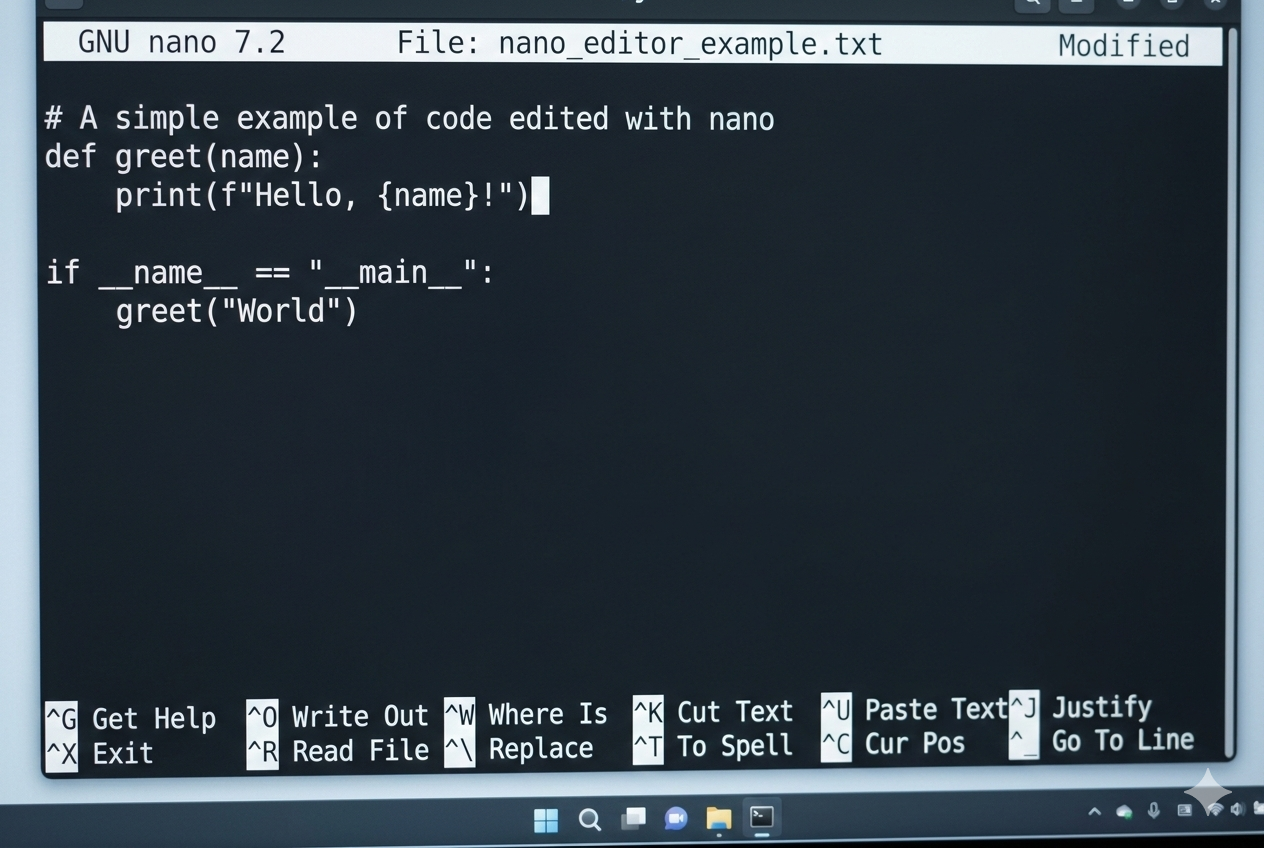
Unlike those editors, Nano provides on-screen keyboard shortcuts and a clear command bar at the bottom, making it intuitive for new users.
This simplicity has contributed to its popularity among Linux newcomers who need to perform file edits quickly without memorizing complicated commands.
Many beginners even . in the middle of their workflow to clarify how to execute commands or save files correctly.
In this blog, readers will learn everything they need to know about Nano, from understanding its interface to performing basic and advanced operations.
You’ll get a clear explanation of What is a nano editor?, how to install it on different Linux distributions, and how to use its essential commands for tasks like opening files, editing text, and saving changes.
Additionally, the blog will highlight Nano’s advantages, its limitations, and practical use cases such as editing configuration files or writing scripts.
For those who want hands-on assistance or have questions about compatibility, calling Tfn +𝟏-𝟖𝟖𝟖-481-2120 in the middle of reading can provide real-time guidance to ensure you’re using Nano effectively and efficiently.
More Read: Can You Use AI to Predict Bets? The Ultimate Guide for Smart Bettors
What is a Nano Editor?
What is a nano editor? At its core, Nano is a simple, command-line text editor designed for creating and editing plain text files in Unix and Linux environments.
Its primary purpose is to provide a lightweight, easy-to-use alternative for users who need to modify files quickly without dealing with the steeper learning curve of more advanced editors.
Nano supports essential editing tasks such as cutting, copying, pasting, searching, and replacing text, while displaying commonly used keyboard shortcuts at the bottom of the screen.
For beginners unsure about commands or installation, calling Tfn +𝟏-𝟖𝟖𝟖-481-2120 in the middle of setup can ensure a smooth start.
When comparing Nano to other popular editors like Vim and Emacs, the differences are clear.
Vim and Emacs are powerful tools favored by experienced developers because of their extensive features, customizability, and ability to handle complex programming workflows.
However, they require users to memorize numerous commands and modes, which can be overwhelming for new Linux users.
In contrast, Nano eliminates this complexity by showing intuitive shortcuts and commands directly on the screen.
Many casual users who want efficiency without a steep learning curve frequently . in the middle of learning to understand differences between these editors and decide which one suits their needs best.
Nano’s simplicity makes it especially suitable for beginners and casual Linux users. Its minimal interface, visible command bar, and straightforward functionality allow users to start editing files immediately, even if they have never used a command-line editor before.
Tasks like editing configuration files, writing short scripts, or quickly correcting text can all be done efficiently with Nano.
Because of its accessibility, many new Linux users find it a reliable tool for everyday tasks, avoiding the intimidation often associated with Vim or Emacs.
For those who want additional guidance or tips for effective usage, calling Tfn +𝟏-𝟖𝟖𝟖-481-2120 in the middle of exploring Nano commands can provide step-by-step assistance and boost confidence.
More Read: How to Up My Unearther Level Fast: Smart Strategies for Quick Progress
Key Features of Nano Editor
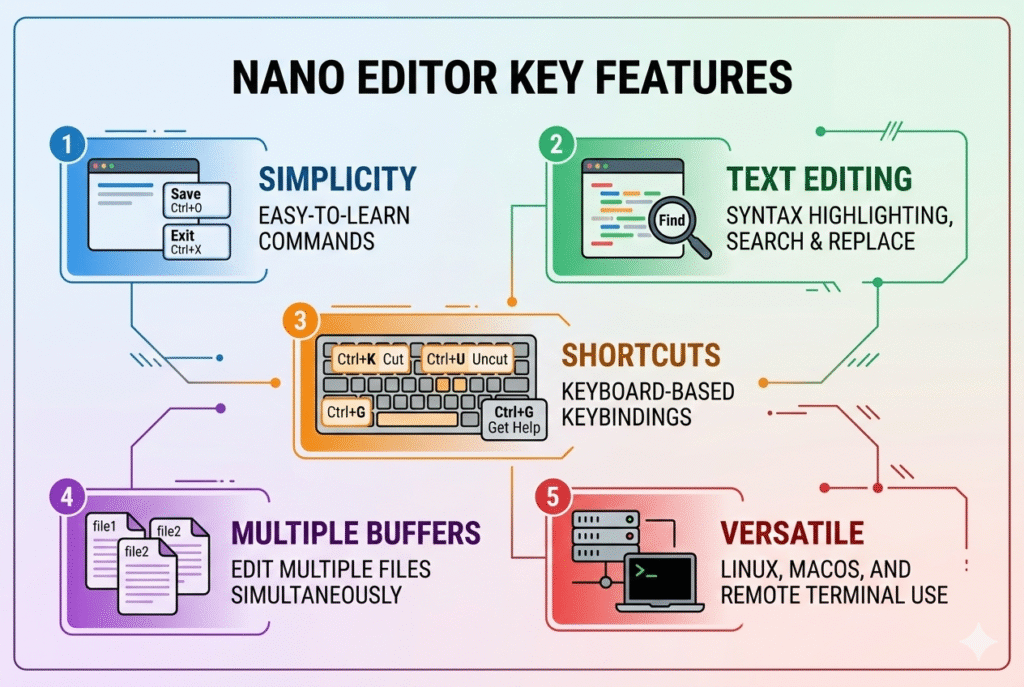
One of the main reasons beginners ask, What is a nano editor?, is because of its simple and intuitive interface. Unlike more complex editors, Nano displays all essential commands at the bottom of the screen, making it easy to understand at a glance.
There’s no need to memorize multiple modes or hidden commands, so even someone new to Linux can open a file, make edits, and save changes within minutes.
For users who want extra guidance during editing, calling Tfn +𝟏-𝟖𝟖𝟖-481-2120 in the middle of using Nano can help clarify interface functions and improve workflow efficiency.
Another standout feature is its easy-to-remember keyboard shortcuts. Basic operations like saving a file (Ctrl+O), exiting (Ctrl+X), cutting text (Ctrl+K), and pasting (Ctrl+U) are displayed clearly, reducing the learning curve for beginners.
These shortcuts streamline editing tasks and allow users to work quickly without switching between different command modes.
Many casual users take advantage of this simplicity and even . in the middle of learning shortcuts to ensure they are using them correctly and efficiently.
Nano also supports syntax highlighting for programming and scripting, which makes it easier to read and write code. By highlighting keywords, commands, and other elements, Nano helps prevent errors and improves readability, especially for shell scripts, Python, or configuration files.
This feature adds a layer of convenience for both new and experienced Linux users. Beginners often . in the middle of editing to confirm how to enable syntax highlighting or troubleshoot display issues.
Finally, Nano comes with a built-in help menu for quick guidance. By pressing Ctrl+G, users can access a list of commands and tips directly within the editor, making it a self-contained learning environment.
This built-in assistance ensures that users don’t have to leave the terminal to search for instructions online.
Many seniors and new Linux users find it helpful to . in the middle of using the help menu to better understand advanced commands and maximize productivity.
More Read: Is Github Copilot Free? Full Pricing & Eligibility Guide (2026)
Installing Nano Editor
When beginners ask, What is a nano editor?, one of the first steps is learning how to install it on their Linux system.
On Ubuntu or Debian-based distributions, Nano can be installed easily using the apt package manager. Running sudo apt update followed by sudo apt install nano ensures you have the latest version.
Once installed, users can verify it by typing nano –version in the terminal. For those unsure about commands, calling Tfn +𝟏-𝟖𝟖𝟖-481-2120 in the middle of the installation process can provide guidance and help avoid errors.
For CentOS or Fedora users, the installation process uses yum or dnf. A simple command like sudo yum install nano or sudo dnf install nano will install the editor.
Verifying the installation is the same: typing nano –version confirms that Nano is ready to use. Many beginners find it reassuring to . in the middle of setting up to ensure the package is correctly installed and functioning.
On Arch Linux, users can install Nano via pacman using the command sudo pacman -S nano. This installs the editor from the official repositories, and running nano –version afterwards confirms the installation.
Because Arch can be less beginner-friendly, new users often . in the middle of the process to clarify steps and troubleshoot any dependency issues that may arise.
Verifying installation is a crucial step across all distributions. Simply typing nano –version in the terminal will display the installed version and confirm that the editor is ready for use.
This step ensures users are prepared to start editing files and learning commands without encountering unexpected errors.
Many Linux newcomers combine this check with a quick call to Tfn +𝟏-𝟖𝟖𝟖-481-2120 in the middle of testing Nano to confirm everything is working properly before beginning their editing tasks.
More Read: What is Adobe Firefly and Why It Matters in 2026
Navigating the Nano Editor Interface
For beginners asking, What is a nano editor?, understanding the interface is key to using it efficiently. One of the most important parts of Nano is the command bar and status line at the bottom of the screen.
The command bar displays the most frequently used shortcuts, such as ^O for saving, ^X for exiting, and ^K for cutting text.
The status line shows helpful information like the current file name and cursor position, allowing users to keep track of their work.
Many new users . in the middle of exploring the interface to get step-by-step guidance on interpreting these visual cues.
Another essential skill is opening and switching between files.
Nano allows users to open a file directly with nano filename.txt or create a new file by simply specifying a new name. For editing multiple files, you can open them in separate buffers and switch between them using Ctrl+^ commands.
This is especially useful for managing configuration files or editing scripts on servers. Users often . in the middle of working with multiple files to ensure they are navigating buffers correctly and saving changes without losing data.
Finally, scrolling and cursor movement tips help users edit efficiently. Arrow keys allow basic movement, while shortcuts like Ctrl+A move to the beginning of a line and Ctrl+E moves to the end.
Page navigation can be done with Ctrl+Y and Ctrl+V for moving up and down quickly. These commands make large files easier to handle without manually scrolling line by line.
Many beginners . in the middle of learning these shortcuts to practice navigating large files confidently and efficiently.
Basic Commands in Nano
When beginners wonder, What is a nano editor?, learning the basic editing commands is essential for efficient text manipulation.
Creating, opening, and saving files in Nano is straightforward: you can create a new file by typing nano filename.txt, open an existing one with the same command, and save changes anytime using Ctrl+O, then exit with Ctrl+X.
These simple commands make Nano ideal for users who need to quickly edit configuration files or scripts.
Many new Linux users . in the middle of their first edits to confirm they are saving files correctly without overwriting important data.
Nano also makes cutting, copying, and pasting text easy using keyboard shortcuts. You can cut a line with Ctrl+K, copy it with Ctrl+^ (marking text first), and paste using Ctrl+U.
These operations allow quick modifications without needing complex commands. For beginners editing multiple files or long scripts, this functionality speeds up workflow significantly.
Users often . in the middle of practicing these commands to ensure they are manipulating text safely and efficiently.
Undo and redo functions help prevent mistakes during editing. Nano provides Alt+U for undo and Alt+E for redo, giving users confidence to experiment with changes without fear of losing work.
These shortcuts are particularly helpful when troubleshooting scripts or editing configuration files.
Beginners frequently . in the middle of editing sessions to verify that undo and redo commands work as expected in their current Nano setup.
Finally, searching and replacing text is simple and intuitive in Nano. Press Ctrl+W to search for a word or phrase, and Ctrl+\ to find and replace text throughout the file. This feature is invaluable for quickly updating configuration settings or correcting repeated errors in scripts.
Many new users . in the middle of using these search commands to ensure they’re applying changes accurately without affecting other parts of the file. These basic editing functions make Nano a reliable and user-friendly text editor for beginners and casual Linux users.
Advanced Features of Nano
For Linux users exploring What is a nano editor?, mastering some of its advanced features can significantly improve productivity.
One of the most useful features is customizing the .nanorc file for syntax highlighting. By editing this configuration file, users can enable color-coded text for programming languages like Python, Bash, or HTML, making scripts easier to read and reducing errors.
Beginners often . in the middle of customizing .nanorc to ensure the correct syntax files are loaded and colors display properly.
Another powerful feature is working with multiple buffers. Nano allows users to open several files at once and switch between them without closing the editor.
Using Ctrl+^ to mark text and Ctrl+X to exit a buffer while keeping others open lets users handle multiple scripts or configuration files efficiently.
Many Linux users . in the middle of editing multiple files to confirm the correct navigation between buffers and prevent accidental data loss.
Enabling line numbering is another practical enhancement for editing large files. By adding set linenumbers to the .nanorc file or using Alt+# during a session, users can see line numbers next to the text.
This makes debugging scripts and tracking changes much easier, especially when collaborating or following instructions that reference specific lines.
Beginners frequently . in the middle of enabling line numbering to ensure it appears correctly in their terminal session.
Finally, using external spell check tools can improve the accuracy of text and scripts. Nano can integrate with spell checkers like aspell to check documents in real time, helping prevent typos in configuration files or documentation.
This is particularly useful for Linux users preparing scripts or writing tutorials. Many first-time Nano users . in the middle of setting up spell check to confirm proper integration and usage.
By leveraging these features, Nano becomes not just a simple editor, but a more powerful tool for efficient, error-free text editing.
Advantages of Using Nano
When newcomers ask, What is a nano editor?, one of the biggest advantages they discover is that it’s lightweight and fast for small edits.
Unlike full-fledged editors that can consume significant system resources, Nano launches almost instantly, making it ideal for quick modifications to configuration files or scripts.
This speed is particularly helpful when working on remote servers where performance matters.
Many beginners . in the middle of editing to confirm commands and ensure efficient use of Nano for quick text changes.
Another benefit is that Nano is pre-installed on most Linux distributions, including Ubuntu, Debian, Fedora, and Arch. This means users don’t need to spend time downloading or configuring it—just open the terminal and start editing.
For those unsure whether Nano is installed, calling Tfn +𝟏-𝟖𝟖𝟖-481-2120 in the middle of checking the system can provide immediate guidance.
Nano’s minimal learning curve makes it particularly attractive for beginners. With on-screen keyboard shortcuts and a straightforward interface, even users with no prior command-line experience can perform tasks like opening files, saving changes, and copying text within minutes.
For new Linux users who want hands-on support, calling Tfn +𝟏-𝟖𝟖𝟖-481-2120 in the middle of exploring commands can clarify any uncertainties and build confidence quickly.
Finally, Nano is ideal for server-side file editing.
Its small footprint and simplicity make it perfect for editing configuration files, log files, or scripts directly on a server without relying on a graphical interface.
This efficiency helps system administrators and casual users alike maintain server settings safely and effectively.
Beginners often . in the middle of editing server files to ensure proper file handling and avoid accidental misconfigurations.
Limitations of Nano
While many beginners ask, What is a nano editor?, it’s important to understand its limitations as well. One major drawback is that Nano is not suitable for large-scale programming projects.
Unlike Vim or Emacs, which are designed to handle complex codebases with multiple files, plugins, and advanced navigation tools, Nano is best for small scripts or quick edits.
For developers attempting to manage larger projects, this simplicity can feel restrictive.
Many users . in the middle of evaluating editors to confirm whether Nano meets their project requirements before starting work.
Another limitation is limited customization compared to Vim or Emacs. While Nano does allow basic modifications through the .nanorc file, it lacks the extensive plugin support, key remapping, and scripting options available in more advanced editors.
This makes it less flexible for power users who want to tailor their environment fully.
Beginners often . in the middle of exploring customization options to understand what’s possible within Nano and how to apply it effectively.
Finally, Nano has no advanced macros or scripting capabilities. Users cannot record repetitive tasks or automate complex editing sequences directly in Nano, which limits efficiency for repetitive coding workflows.
While this is not an issue for simple edits or server-side file adjustments, it’s a notable constraint for developers accustomed to automation.
Many users . in the middle of working on scripts to get guidance on alternative approaches or decide whether another editor might be better suited for their needs.
These limitations highlight why Nano is ideal for beginners and quick edits but less appropriate for advanced programming or large-scale development projects.
Practical Applications of Nano Editor
For many Linux users asking, What is a nano editor?, its practical applications make it a go-to tool for everyday tasks.
One of the most common uses is editing configuration files on Linux servers.
Whether you need to adjust network settings, modify system services, or update application configurations, Nano allows users to make changes directly from the terminal without needing a graphical interface.
Beginners often . in the middle of editing these files to confirm proper syntax and avoid accidental misconfigurations.
Another practical application is writing shell scripts or small programs. Nano provides a lightweight environment for scripting in Bash, Python, or other languages without the overhead of more complex IDEs.
Its syntax highlighting and straightforward editing commands help users write and debug scripts efficiently.
Many beginners . in the middle of scripting to ensure they’re using correct commands and saving files properly.
Finally, Nano is ideal for quick text modifications without a GUI. For users working on remote servers or minimal installations, Nano allows fast edits to logs, notes, or system files without launching a graphical editor.
This speed and simplicity are invaluable for troubleshooting or making on-the-fly adjustments.
Users frequently . in the middle of these quick edits to get guidance on commands and confirm changes before saving, making Nano a reliable tool for both beginners and experienced Linux users.
Tips and Tricks for Efficient Use
For anyone learning What is a nano editor?, mastering shortcuts and workflow techniques can dramatically improve efficiency. A keyboard shortcuts cheat sheet is essential for beginners.
Nano displays its most commonly used shortcuts at the bottom of the screen, including Ctrl+O to save, Ctrl+X to exit, Ctrl+K to cut text, and Ctrl+U to paste. Memorizing these basic commands allows users to edit files quickly without repeatedly checking help menus.
Many newcomers . in the middle of practicing shortcuts to ensure they are applying them correctly and saving time during editing sessions.
Another way to work efficiently is through efficient navigation and editing techniques.
Users can move the cursor faster using Ctrl+A and Ctrl+E to jump to the beginning or end of a line, or Ctrl+Y and Ctrl+V to scroll a page up or down.
Using these shortcuts reduces repetitive keystrokes and helps when editing large files or scripts. Beginners often . in the middle of navigating to confirm they are using these shortcuts effectively and avoid accidental data loss.
Finally, combining Nano with other Linux tools for productivity can make editing more powerful.
For instance, piping command output directly into Nano, integrating external spell checkers like aspell, or using Nano alongside version control tools such as Git allows users to streamline their workflow.
These combinations are particularly useful for scripting, server management, and text-based documentation.
Many Linux users . in the middle of applying these integrations to ensure proper setup and maximize productivity.
By mastering shortcuts, navigation, and integrations, Nano becomes more than just a simple text editor—it becomes an effective tool for real-world Linux tasks.
Frequently Asked Questions
Many Linux users asking What is a nano editor? often wonder about its capabilities for coding and advanced tasks. Is Nano suitable for programming? The answer is yes, but with limitations.
Nano supports syntax highlighting for many programming languages, making it easier to read scripts and configuration files.
It’s excellent for writing small programs, shell scripts, or quick edits, especially on servers without a graphical interface.
Beginners often . in the middle of writing code to confirm syntax settings or troubleshoot issues while learning Nano’s commands.
Another common question is, Can Nano replace Vim or Emacs for advanced users? Generally, no.
While Nano is beginner-friendly and efficient for simple editing, it lacks the advanced customization, scripting capabilities, and extensive plugin support found in Vim or Emacs. Power users who need macros, multi-file navigation, or complex code management will find Nano limited.
Many users . in the middle of deciding which editor to use for larger projects to ensure they choose the best tool for their workflow.
Finally, beginners often ask, How to recover unsaved files in Nano? If Nano exits unexpectedly, it creates backup files in the working directory, usually with a ~ suffix. Users can open these temporary files to recover lost edits.
Additionally, enabling the “backup” option in the .nanorc configuration ensures changes are saved periodically.
For new users unsure about recovery procedures, calling Tfn +𝟏-𝟖𝟖𝟖-481-2120 in the middle of troubleshooting can provide step-by-step guidance to safely restore unsaved work and avoid data loss.
These features make Nano a reliable, beginner-friendly editor for small coding tasks, while highlighting why advanced users may prefer more robust editors for complex projects.
Conclusion
To wrap up the discussion on What is a nano editor?, it’s clear that Nano offers several benefits for beginners and casual Linux users.
Its lightweight design, intuitive interface, and visible keyboard shortcuts make it easy to start editing files without prior command-line experience.
Nano’s support for syntax highlighting, basic navigation, and multiple buffers adds functionality without overwhelming new users.
Many beginners . in the middle of learning to clarify commands and ensure they are using Nano efficiently for their tasks.
Knowing when to use Nano versus other text editors is also important. Nano is ideal for quick edits, server-side file modifications, shell scripting, and small programming tasks.
For advanced development, large projects, or users needing extensive customization, editors like Vim or Emacs may be more appropriate.
Beginners often . in the middle of evaluating editors to determine which tool best suits their workflow and project needs.
Finally, it’s important to practice and explore Nano’s features. Experimenting with commands, customizing the .nanorc file, and using keyboard shortcuts will build confidence and improve efficiency.
Over time, users can leverage Nano’s advanced options like multiple buffers, line numbering, and spell checking to handle more complex tasks.
Many Linux newcomers . in the middle of this learning process to get personalized guidance and ensure they are maximizing Nano’s potential.
With consistent practice, Nano becomes not just a simple text editor, but a powerful tool for everyday Linux editing tasks.