
Digital advertising has experienced rapid growth over the last decade as businesses shift their marketing budgets from traditional media to online platforms.
According to industry reports from organizations like the Interactive Advertising Bureau (IAB), global digital ad spending surpassed $600 billion in 2023, and it continues to grow every year.
Companies of all sizes now rely on digital channels such as search engines, social media, mobile apps, and websites to reach their target audiences.
This growth has created a massive ecosystem where advertisers compete for consumer attention in real time.
As a result, many marketers and business owners are asking questions like “What is an example of an AdTech?” to better understand the technologies that power modern online advertising.
Technology has become essential in managing modern advertising campaigns because of the sheer scale and complexity involved. In the past, placing an advertisement in a newspaper or on television was a relatively simple process.
Today, digital advertising involves analyzing large amounts of user data, targeting specific audiences, optimizing ad performance, and delivering ads across multiple platforms simultaneously.
Advertising Technology, commonly known as AdTech, helps automate these tasks. Tools such as demand-side platforms (DSPs), data management platforms (DMPs), and ad exchanges allow marketers to run campaigns efficiently while reaching the right audience at the right time.
When people ask “What is an example of an AdTech?”, they are often referring to platforms like Google Ads, The Trade Desk, or Adobe Advertising that help automate ad buying and targeting.
Another important factor driving the need for AdTech is the rise of programmatic advertising. Studies show that more than 80% of digital display ads are now bought programmatically, meaning the buying and selling process happens automatically through software.
These systems use algorithms and real-time data to decide which ad should appear to which user within milliseconds. This level of automation would not be possible without advanced advertising technologies.
Understanding What is an example of an AdTech? helps marketers see how digital ads are delivered, optimized, and measured.
By using modern AdTech platforms, companies can improve campaign performance, reach more relevant audiences, and maximize their return on advertising investment.
More Read: Is Kling a Chinese Company? Everything You Need to Know
Understanding Advertising Technology (AdTech)
Advertising Technology, commonly known as AdTech, refers to the collection of digital tools and software platforms used to plan, manage, deliver, and measure online advertising campaigns.
These technologies help advertisers reach the right audience across websites, mobile apps, and digital platforms.
In simple terms, AdTech acts as the infrastructure that powers modern digital advertising.
Many marketers who are new to the industry often ask, What is an example of an AdTech? A clear answer would include platforms like Google Ads, The Trade Desk, and MediaMath, which help businesses buy and manage digital ad space efficiently.
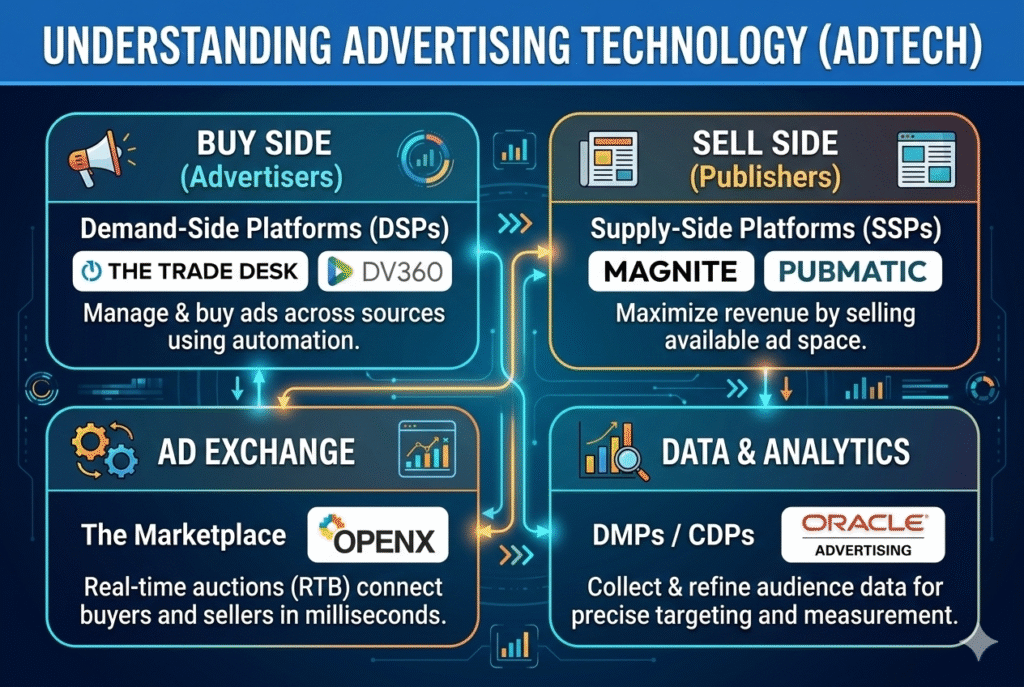
AdTech plays a critical role in connecting three major participants in the digital advertising ecosystem: advertisers, publishers, and audiences.
Advertisers are the businesses that want to promote their products or services, while publishers are the website or app owners who provide space where ads can appear.
AdTech platforms act as the bridge between these two groups by facilitating the buying and selling of advertising space.
For example, when a user visits a website, an automated system instantly determines which advertiser’s ad should be displayed based on the user’s interests and browsing behavior.
This entire process happens in a fraction of a second. When people ask What is an example of an AdTech?, they are usually referring to technologies that enable this seamless connection between brands and online audiences.
Automation and data are the backbone of modern digital advertising. With billions of users browsing the internet daily, manually placing ads is no longer practical.
AdTech platforms use advanced algorithms and real-time data to automate advertising decisions. This process is commonly known as programmatic advertising, where ads are bought and sold automatically through software systems.
According to industry reports, programmatic advertising accounts for more than 85% of digital display advertising globally.
Data also plays a vital role in improving ad targeting and campaign performance. AdTech tools analyze user behavior, demographics, interests, and browsing patterns to deliver highly relevant advertisements.
This ensures that the right message reaches the right person at the right time. Understanding What is an example of an AdTech? helps marketers see how data-driven technology makes digital advertising more efficient, targeted, and measurable in today’s competitive online marketplace.
More Read: What is bind AI? A Clear and Simple Explanation
Popular AdTech Platforms Used in the Industry
Advertising technology platforms have become a fundamental part of the modern marketing ecosystem.
As digital advertising continues to grow rapidly, businesses need advanced tools to manage campaigns across multiple channels such as websites, mobile apps, social media, and streaming platforms.
These tools are commonly known as AdTech platforms, and they help advertisers automate, optimize, and measure their advertising efforts.
Many marketers who are new to digital marketing often ask, What is an example of an AdTech? In simple terms, AdTech platforms are software solutions designed to help businesses create, deliver, and track online advertisements more effectively.
Several well-known advertising technology platforms are widely used in the industry today.
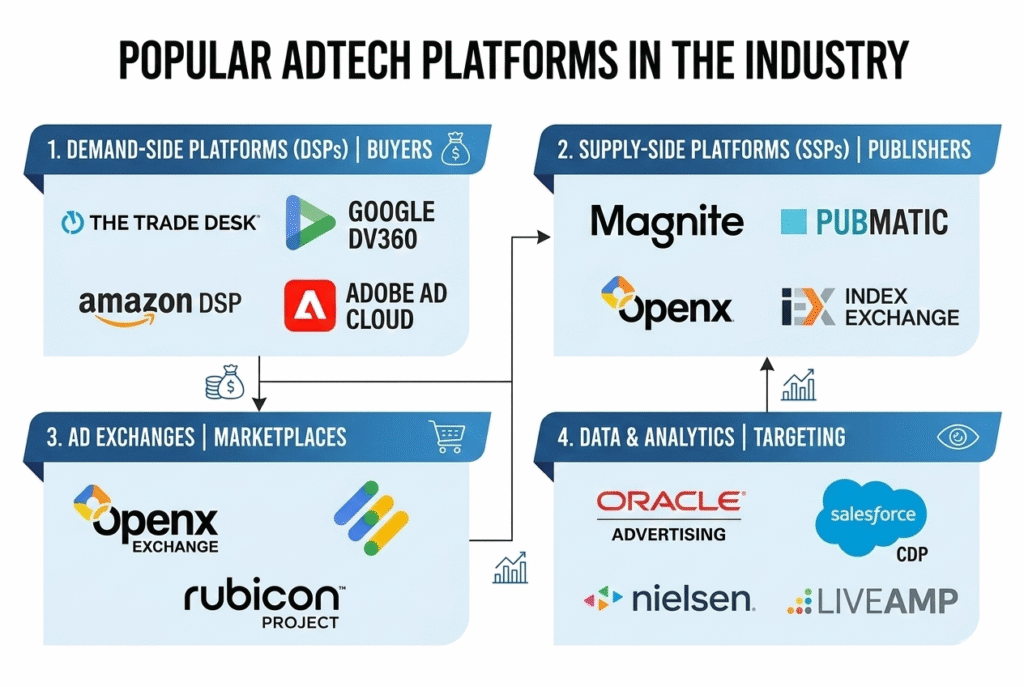
For example, Google Ads is one of the most popular AdTech tools, allowing businesses to display ads on Google search results, YouTube, and millions of partner websites.
Another major platform is The Trade Desk, which specializes in programmatic advertising and allows advertisers to buy digital ad space across multiple channels using data-driven insights.
Platforms like Adobe Advertising Cloud, MediaMath, and AppNexus (now part of Xandr) also provide advanced solutions for campaign management, audience targeting, and performance analytics.
When businesses ask What is an example of an AdTech?, these platforms are often mentioned because they represent the core technologies powering modern digital advertising.
These tools help businesses run and manage ads more efficiently by offering features such as audience targeting, real-time bidding, campaign optimization, and detailed performance tracking.
For example, an online retailer can use AdTech platforms to target specific audiences based on demographics, interests, or previous browsing behavior.
This allows companies to show ads to users who are more likely to engage with their products or services.
Marketers rely heavily on AdTech platforms because they significantly improve campaign performance and return on investment.
According to industry reports, businesses that use data-driven advertising tools can increase ad efficiency by up to 30–40% compared to traditional marketing methods. Automation also reduces manual work and helps marketers focus on strategy and creativity.
Understanding What is an example of an AdTech? allows businesses to explore the powerful technologies that drive successful digital advertising campaigns and enable brands to reach the right audiences at the right time.
More Read: What is Wren AI Used For? A Simple Guide for Beginners
Real Examples of AdTech Companies
The digital advertising ecosystem is supported by many companies that specialize in providing AdTech solutions.
These organizations develop advanced platforms that help businesses plan, execute, and optimize advertising campaigns across digital channels.
As online advertising becomes more competitive and data-driven, companies rely heavily on these technologies to reach the right audiences.
Many marketers exploring digital advertising often ask, What is an example of an AdTech? The answer usually includes well-known platforms developed by major technology companies that simplify and automate the advertising process.
Several leading companies dominate the AdTech industry by offering powerful tools for advertisers and publishers.
One of the most widely recognized platforms is Google Ads, which allows businesses to run advertisements across Google Search, YouTube, and millions of websites in the Google Display Network.
Another strong example is The Trade Desk, a demand-side platform that enables advertisers to purchase digital ad space programmatically across various devices and channels, including mobile, desktop, and connected TV.
Similarly, MediaMath provides programmatic marketing solutions that help brands manage advertising campaigns using data and automation.
Adobe Advertising is another important player, offering advanced tools that integrate advertising with analytics and customer experience platforms.
When discussing What is an example of an AdTech?, these platforms are frequently highlighted because they represent some of the most influential technologies used by advertisers worldwide.
These AdTech platforms play a critical role in supporting programmatic advertising, which is the automated buying and selling of digital ad space.
Instead of manually negotiating ad placements, programmatic systems use algorithms and real-time bidding (RTB) to determine which advertisement should appear for a specific user.
For instance, when someone visits a website, an automated auction occurs in milliseconds where advertisers bid to display their ads to that particular user based on their interests, demographics, and browsing history.
Industry data shows that over 85% of digital display ads are now purchased through programmatic technology, highlighting the growing importance of AdTech platforms.
Understanding What is an example of an AdTech? helps businesses recognize the companies and technologies that power this automated ecosystem.
By leveraging these platforms, marketers can improve ad targeting, increase efficiency, and maximize the performance of their digital advertising campaigns.
Also Read: What is Imagga Used For?
How AdTech Platforms Work
The digital advertising ecosystem relies on a complex but highly efficient process that allows advertisers to buy and sell ad space across websites, apps, and online platforms.
In simple terms, advertisers want to promote their products, while publishers—such as website owners or mobile app developers—provide the space where ads can appear.
Advertising technology platforms help connect these two groups and manage the entire process automatically.
Many marketers trying to understand this system often ask, What is an example of an AdTech? Platforms like Google Ads, The Trade Desk, and MediaMath are commonly cited because they help automate the buying and selling of digital ad inventory.
The process begins when a user visits a website or opens a mobile application. Within milliseconds, an automated system evaluates the available ad space and decides which advertisement should be displayed.
This is where real-time bidding (RTB) comes into play. RTB is an automated auction process where multiple advertisers bid for the opportunity to show their ad to a specific user.
The advertiser willing to pay the highest price for that impression usually wins the auction, and their ad is instantly displayed.
This entire transaction happens in less than a second, making it possible to deliver highly relevant ads to users in real time.
When people ask What is an example of an AdTech?, they are often referring to the platforms that enable this real-time auction system and streamline the digital advertising marketplace.
Audience targeting and data analytics also play a critical role in improving ad delivery. Modern AdTech platforms analyze large amounts of data, including user demographics, browsing behavior, location, and interests.
This information helps advertisers show ads to people who are more likely to be interested in their products or services.
For example, an online clothing store can target ads to users who have recently searched for fashion products or visited similar websites.
Research shows that targeted advertising can significantly improve campaign performance, often increasing engagement and conversion rates compared to non-targeted ads.
Understanding What is an example of an AdTech? helps businesses see how advanced technologies use automation, real-time bidding, and data analytics to make digital advertising more precise, efficient, and effective in reaching the right audiences.
Key Types of AdTech Tools
The AdTech ecosystem includes several specialized platforms that help advertisers and publishers manage digital advertising efficiently.
These platforms work together to automate the process of buying, selling, and optimizing ads across the internet.
For businesses trying to understand the digital advertising landscape, a common question that arises is What is an example of an AdTech? The answer often involves a combination of tools such as Demand-Side Platforms (DSPs), Supply-Side Platforms (SSPs), Data Management Platforms (DMPs), and ad exchanges.
Each of these technologies plays a specific role in the advertising ecosystem.
Demand-Side Platforms (DSPs) are designed primarily for advertisers and agencies that want to purchase digital advertising space across multiple websites and apps.
DSPs allow advertisers to manage campaigns from a single interface, set budgets, and target specific audiences using data insights.
Platforms like The Trade Desk and MediaMath are well-known examples of DSPs. Through these tools, advertisers can automatically bid on ad impressions in real time and optimize campaigns for better performance.
When discussing What is an example of an AdTech?, DSPs are often highlighted because they help advertisers efficiently reach large audiences through automated systems.
On the other side of the ecosystem are Supply-Side Platforms (SSPs), which are used by publishers such as website owners, mobile app developers, and digital media companies.
SSPs help publishers manage their advertising inventory and maximize revenue by selling available ad space to the highest bidder.
These platforms connect publishers to multiple demand sources, ensuring that their ad placements generate the best possible value.
Another important component is the Data Management Platform (DMP), which focuses on collecting, organizing, and analyzing audience data.
DMPs gather information from various sources such as websites, apps, and third-party data providers.
This data helps advertisers create detailed audience segments and improve targeting accuracy.
When marketers ask What is an example of an AdTech?, DMPs are a key part of the answer because they provide the insights needed for effective advertising strategies.
Finally, ad exchanges act as digital marketplaces where advertisers and publishers meet. These platforms facilitate the buying and selling of ad impressions through automated auctions.
Understanding What is an example of an AdTech? helps businesses recognize how these technologies work together to create a fast, data-driven, and highly efficient digital advertising ecosystem.
Benefits of Using AdTech in Marketing
One of the biggest advantages of using advertising technology is the ability to achieve better audience targeting and personalization.
Traditional advertising methods often reach a broad audience, many of whom may not be interested in the product or service being promoted.
However, modern AdTech platforms use advanced data analysis to identify and target specific user groups based on demographics, interests, online behavior, and location.
This allows businesses to deliver highly relevant advertisements to people who are more likely to engage with them.
When marketers ask What is an example of an AdTech?, platforms like Google Ads or The Trade Desk are often mentioned because they enable detailed audience segmentation and personalized ad experiences.
Another major benefit of AdTech is improved campaign performance tracking. Digital advertising platforms provide real-time analytics and performance metrics that help marketers evaluate the success of their campaigns.
Advertisers can track important data such as impressions, clicks, conversions, and user engagement.
This information allows businesses to quickly identify which strategies are working and which need improvement.
For example, if an advertisement is not generating enough clicks, marketers can adjust the targeting, budget, or creative content.
Understanding What is an example of an AdTech? also means recognizing the tools that provide these valuable insights and analytics to improve advertising results.
Automation of advertising processes is another key advantage offered by AdTech platforms. Managing digital advertising campaigns manually across multiple websites and platforms would require a huge amount of time and effort.
AdTech solutions automate many tasks such as bidding, ad placement, targeting, and campaign optimization.
Technologies like programmatic advertising allow ads to be purchased and displayed automatically through algorithms and real-time bidding systems.
This automation helps marketers manage large-scale campaigns more efficiently while reducing manual workload.
Finally, one of the most important benefits of AdTech is achieving a higher return on investment (ROI).
Because ads are targeted more accurately and campaigns are continuously optimized using data insights, businesses can spend their advertising budgets more effectively.
Studies show that data-driven advertising strategies can improve campaign performance and increase conversion rates significantly.
By understanding What is an example of an AdTech?, companies can leverage the right tools to improve efficiency, reduce wasted ad spend, and maximize the overall impact of their digital marketing efforts.
Challenges in the AdTech Ecosystem
While advertising technology offers many benefits, it also comes with several challenges that businesses and marketers must address.
One of the most significant issues in the AdTech industry involves privacy regulations and data protection. Modern advertising relies heavily on user data to deliver targeted and personalized ads.
However, increasing concerns about how companies collect, store, and use personal data have led governments around the world to introduce stricter privacy laws.
Regulations such as the General Data Protection Regulation (GDPR) in Europe and the California Consumer Privacy Act (CCPA) in the United States require companies to be more transparent about how user data is collected and used.
Because of these rules, many marketers trying to understand the ecosystem ask What is an example of an AdTech? and how these platforms ensure compliance with privacy standards while still delivering effective advertising.
Another challenge in the digital advertising industry is ad fraud and transparency concerns. Ad fraud occurs when fake traffic, bots, or deceptive practices generate false impressions or clicks on advertisements.
This can cause businesses to spend advertising budgets on users who are not real or who never intended to engage with the ads.
According to industry reports, advertisers lose billions of dollars every year due to ad fraud, making it a major concern for brands and agencies.
To address this issue, AdTech companies are investing in advanced fraud detection systems and verification tools that help ensure ads are shown to real audiences.
When discussing What is an example of an AdTech?, platforms such as The Trade Desk or Adobe Advertising often include built-in security features designed to detect suspicious activity and improve transparency.
Another growing issue is the increasing complexity of advertising technology stacks. The modern AdTech ecosystem includes multiple platforms such as DSPs, SSPs, DMPs, and analytics tools, all working together to deliver digital ads.
While these technologies improve campaign performance, they can also make the system more complicated for businesses to manage.
Companies often need specialized teams or expertise to integrate and operate multiple advertising platforms effectively.
Understanding What is an example of an AdTech? helps marketers see not only the benefits of these technologies but also the challenges involved.
As the digital advertising industry continues to evolve, businesses must balance innovation with privacy protection, fraud prevention, and simplified technology management.
Future Trends in AdTech
The future of digital advertising is being shaped by rapid technological advancements, especially in areas like artificial intelligence, privacy-focused tracking, and new media channels.
As businesses continue to invest heavily in online marketing, advertising technology platforms are evolving to meet changing consumer behaviors and regulatory requirements.
Many marketers exploring these innovations often ask What is an example of an AdTech? because understanding these platforms helps them stay competitive in the fast-changing digital advertising landscape.
One of the most important trends in the industry is the growing use of artificial intelligence (AI) in advertising.
AI-powered algorithms are now widely used by AdTech platforms to analyze massive amounts of data and make real-time decisions about ad placements.
These systems can automatically optimize campaigns, adjust bidding strategies, and predict which audiences are most likely to engage with specific advertisements.
For example, platforms like Google Ads and The Trade Desk use machine learning models to improve targeting accuracy and campaign performance.
As a result, AI helps marketers deliver more personalized and relevant ads while reducing manual work.
When discussing What is an example of an AdTech?, AI-powered platforms are often highlighted because they represent the next generation of intelligent advertising tools.
Another major shift in the industry involves cookieless tracking and privacy-first solutions. For many years, advertisers relied on third-party cookies to track user behavior across websites and deliver targeted ads.
However, growing privacy concerns and stricter regulations have pushed technology companies to move away from this approach.
Major web browsers are gradually limiting or eliminating third-party cookies, forcing AdTech companies to develop new privacy-friendly tracking methods.
These include first-party data strategies, contextual advertising, and privacy-safe data sharing technologies that protect user information while still enabling effective marketing.
The growth of programmatic advertising and connected TV (CTV) is another major trend shaping the future of AdTech.
Programmatic systems already account for the majority of digital ad purchases, allowing advertisers to buy ad space automatically through real-time auctions.
At the same time, connected TV platforms—such as smart TVs and streaming services—are becoming a popular advertising channel.
Industry reports show that global spending on connected TV advertising is increasing rapidly each year.
Understanding What is an example of an AdTech? helps businesses see how these technologies are driving innovation and transforming the future of digital advertising.
Conclusion
Advertising technology has become a critical part of the modern digital marketing ecosystem.
As businesses continue shifting their advertising budgets from traditional media to online platforms, the need for advanced tools that manage and optimize campaigns has grown significantly.
AdTech platforms help advertisers reach the right audiences, automate complex advertising processes, and measure campaign performance with precision.
Because of this growing influence, many marketers and business owners frequently ask What is an example of an AdTech? to better understand the technologies that power modern digital advertising strategies.
In today’s competitive digital landscape, AdTech plays an essential role in improving the efficiency and effectiveness of advertising campaigns.
These technologies allow advertisers to target audiences based on data such as demographics, interests, browsing behavior, and location.
Instead of showing ads to a broad and often irrelevant audience, businesses can deliver highly personalized advertisements to users who are more likely to engage with their products or services.
Platforms like Google Ads, The Trade Desk, and Adobe Advertising demonstrate What is an example of an AdTech?, as they provide tools that help companies automate ad placements, optimize budgets, and analyze campaign results in real time.
Another major advantage of adopting AdTech platforms is the ability to use data-driven decision-making.
Businesses can access detailed performance metrics such as impressions, click-through rates, conversions, and return on ad spend.
This level of transparency allows marketers to quickly adjust their strategies and maximize advertising effectiveness.
Research in the digital marketing industry shows that companies using data-driven advertising technologies can significantly improve campaign performance and customer engagement.
Furthermore, automation features within AdTech platforms simplify the management of large-scale advertising campaigns.
Tasks such as bidding, targeting, and optimization are handled by algorithms, saving marketers time and reducing manual effort.
As the digital advertising industry continues to grow and evolve, understanding What is an example of an AdTech? becomes increasingly important for businesses looking to remain competitive.
Overall, AdTech has transformed how brands connect with their audiences in the digital world.
By adopting advanced advertising technology platforms, businesses can improve targeting accuracy, enhance campaign performance, and achieve higher returns on their marketing investments.
1. What is an example of an AdTech?
An example of an AdTech platform is Google Ads, which allows businesses to create, manage, and optimize online advertising campaigns across search engines, websites, and YouTube. Other examples include The Trade Desk, MediaMath, and Adobe Advertising, which help automate digital ad buying and targeting.
2. How does AdTech work in digital advertising?
AdTech works by using software platforms to connect advertisers with publishers. These platforms automate processes like ad placement, audience targeting, real-time bidding, and campaign tracking, helping businesses reach the right users online.
3. Why is AdTech important for marketers?
AdTech helps marketers improve campaign efficiency, targeting accuracy, and performance tracking. With advanced analytics and automation, businesses can deliver more relevant ads and achieve better results from their advertising budgets.
4. What are the main types of AdTech platforms?
The main types of AdTech platforms include Demand-Side Platforms (DSPs), Supply-Side Platforms (SSPs), Data Management Platforms (DMPs), and ad exchanges. Each plays a role in buying, selling, and optimizing digital ad inventory.
5. How does programmatic advertising relate to AdTech?
Programmatic advertising is powered by AdTech platforms that automatically buy and sell ad space using real-time bidding and data analysis. This allows advertisers to deliver ads to the right audience quickly and efficiently.