
Digital marketing is more competitive today than ever before. As of 2025, there are over 1.1 billion websites online, and millions of blog posts are published every single day.
According to HubSpot, companies that publish blog content consistently generate 67% more leads per month than those that don’t. That statistic alone explains why simply having a website is no longer enough — visibility now depends on consistency, strategy, and scale.
Many businesses still rely on occasional publishing. They post one or two articles a month and hope for organic traffic growth.
The reality? Search engines reward depth, consistency, and topical authority. If your competitors are publishing 10–20 high-quality pieces per month while you’re posting sporadically, you’re slowly losing search visibility.
Publishing occasionally may maintain your presence, but it rarely drives serious growth.
This shift is where the question naturally arises: what is content at scale? In simple terms, it’s the process of producing a large volume of high-quality, strategically aligned content without sacrificing consistency or standards.
It’s not about flooding the internet with random articles. Instead, it’s about building systems, workflows, and strategies that allow brands to create meaningful content efficiently.
Understanding what is content at scale is crucial because it represents the difference between reactive marketing and sustainable growth.
For example, many SaaS companies now build topic clusters targeting hundreds of related keywords instead of just a few.
This structured approach helps them dominate entire subject areas rather than competing for isolated search terms. That’s the power behind what is content at scale — it compounds traffic over time.
In this article, you’ll learn exactly what is content at scale, why it matters in today’s competitive landscape, and how businesses are using it to drive measurable growth. By the end, you’ll understand why scaling content strategically is no longer optional — it’s essential.
More Read: Is Bylo Ai Free? Complete Guide to Pricing, Plans & Hidden Costs
Understanding Content at Scale
If you’ve been wondering what is content at scale, the simplest definition is this: it’s a structured approach to producing large amounts of high-quality content efficiently and consistently to achieve measurable business growth.
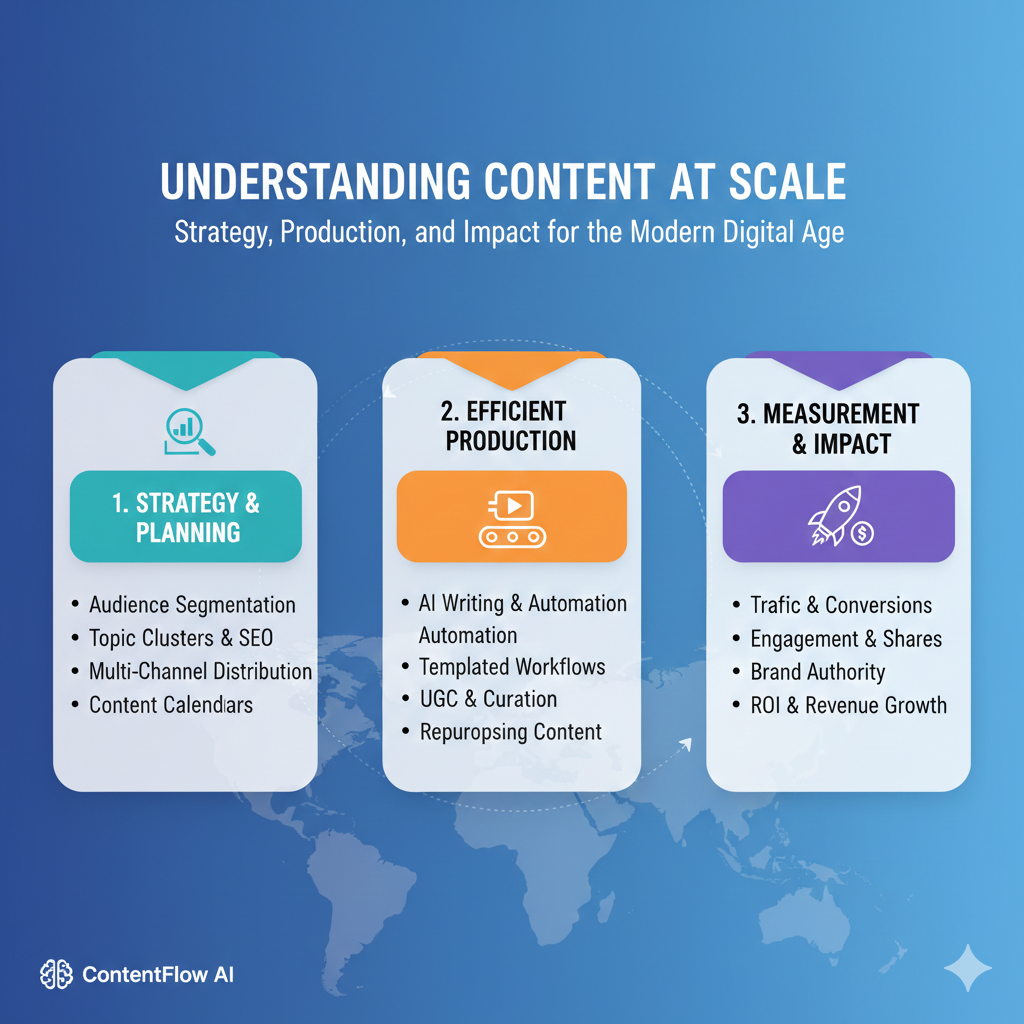
It’s not just about publishing more — it’s about publishing smarter, using systems, data, and repeatable processes.
Many people confuse scaling with volume. But there’s a big difference between high-volume content and strategic scaling.
High-volume content often means pushing out dozens (or even hundreds) of articles without clear keyword research, search intent analysis, or editorial standards. This approach can actually hurt performance.
Google’s Helpful Content updates emphasize quality, relevance, and expertise — meaning thin or repetitive content can reduce visibility rather than improve it.
Strategic scaling, on the other hand, is data-driven. It starts with keyword clustering, competitive analysis, and understanding audience needs.
According to research by Ahrefs, 90.63% of content gets no organic traffic from Google — largely because it lacks strategy.
That statistic highlights why simply increasing output isn’t enough. When businesses understand what is content at scale, they focus on building topic authority, internal linking systems, and consistent publishing workflows.
Consider a startup versus an enterprise. A startup with limited resources might begin by targeting long-tail keywords within one niche, publishing 8–10 well-researched articles per month tied to a clear funnel strategy.
That’s scalable content within their capacity. An enterprise company, however, might operate multiple content teams across regions, producing hundreds of SEO-optimized pieces monthly, supported by automation tools and editorial review layers.
Both are practicing what is content at scale, but at different levels. The difference isn’t just output — it’s infrastructure.
Scaling means having processes that allow growth without sacrificing quality. Whether you’re a lean startup or a global brand, the goal remains the same: build a repeatable system that turns content into consistent traffic, leads, and long-term authority.
Also Read: How Local Brands Like Loopie Are Winning Over Indian Parents Vs Imported Baby Gear
How Content at Scale Works
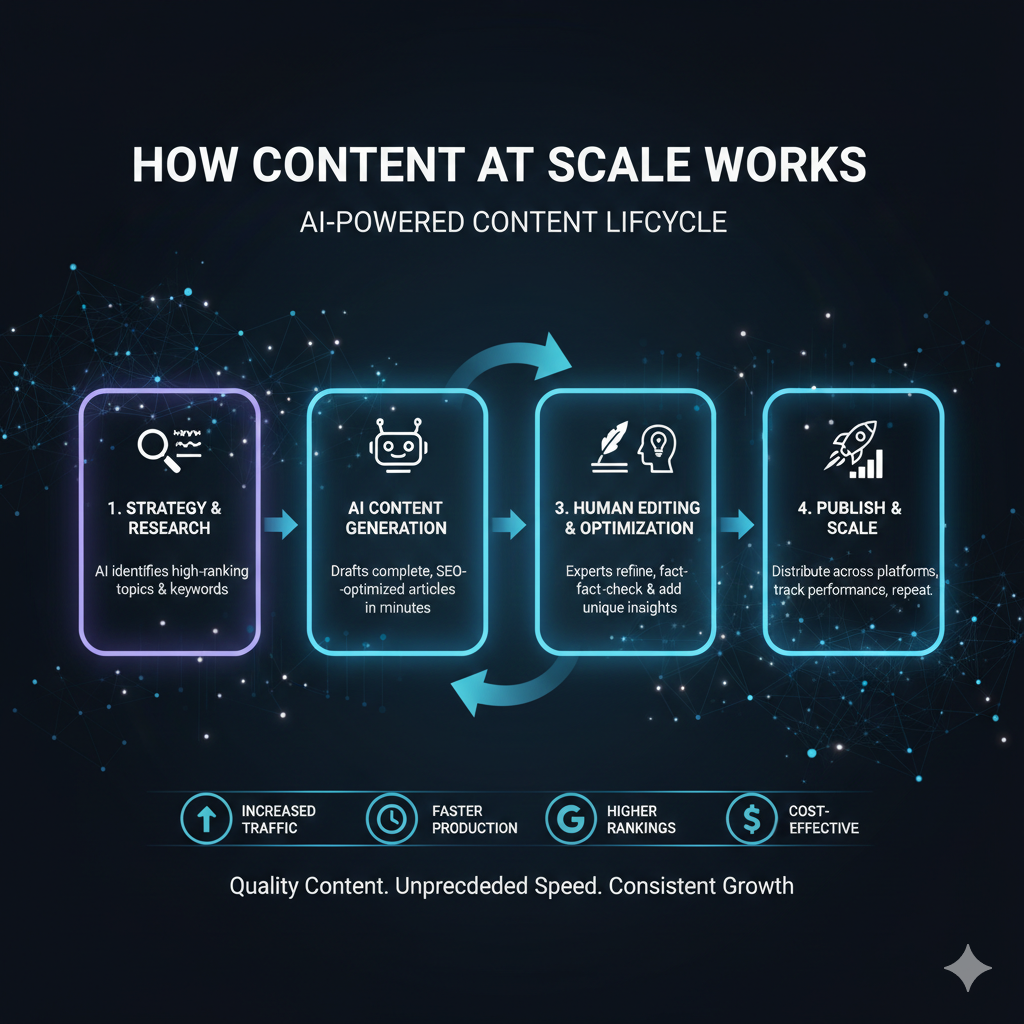
One of the core foundations is building topic clusters. Instead of writing isolated blog posts, businesses create a pillar page around a broad subject and then publish multiple supporting articles targeting related subtopics.
For example, a SaaS company writing about email marketing might create a main guide and then supporting posts on automation tools, segmentation strategies, A/B testing, and deliverability tips.
This model strengthens internal linking and improves topical authority. In fact, websites using cluster strategies often see stronger ranking stability because search engines recognize depth and relevance.
Next comes keyword mapping and search intent. Data shows that over 90% of pages receive no traffic because they target the wrong keywords or ignore intent.
Strategic scaling means grouping keywords by informational, navigational, or transactional intent and aligning each piece of content with a clear goal.
This precision is a big part of what is content at scale — it ensures every article has a purpose within the broader strategy.
Another critical element is creating repeatable workflows. High-performing teams rely on editorial calendars, content briefs, templates, and SOPs (standard operating procedures).
This reduces guesswork and keeps production consistent even as output increases.
The role of automation and AI has also become significant. AI tools can assist with outlining, research summaries, optimization suggestions, and content drafts, dramatically increasing production speed. However, automation alone is not the answer.
That’s where human editing and quality assurance come in. Editors ensure accuracy, maintain brand voice, fact-check claims, and improve readability. The most successful brands combine AI efficiency with human oversight.
Ultimately, that balance defines what is content at scale — high volume supported by smart systems and uncompromising quality control.
More Read: What is Adobe Firefly and Why It Matters in 2026
Why Businesses Are Investing in Scalable Content
When businesses fully understand what is content at scale, the benefits become measurable — not just theoretical.
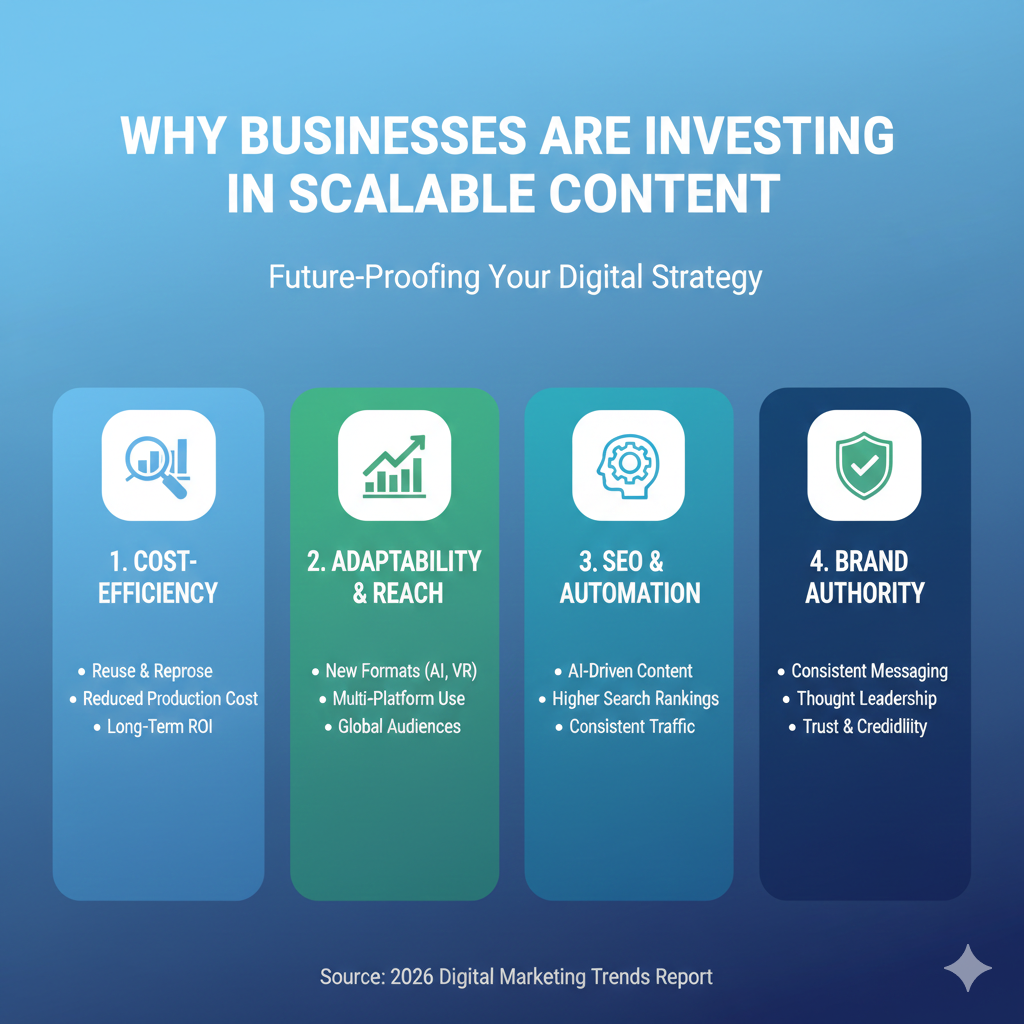
One of the biggest advantages is increased organic traffic. The more high-quality, search-optimized pages you publish, the more opportunities you create to rank.
According to BrightEdge, over 53% of all website traffic comes from organic search. Companies that consistently expand their content footprint naturally increase their visibility across hundreds (or even thousands) of keywords.
Another major benefit is faster topical authority. Search engines favor websites that demonstrate depth on a subject.
If you publish one article about a topic, you compete on a single keyword. But if you build clusters of 20–50 related articles, you signal expertise.
This is a core reason why understanding what is content at scale matters — it’s about owning an entire topic, not just participating in it.
Brands that implement this strategy often see improved ranking stability and stronger domain authority over time.
Scaling content also drives consistent lead generation. HubSpot reports that businesses that blog regularly generate significantly more inbound leads than those that don’t.
When content targets multiple stages of the buyer journey — awareness, consideration, and decision — it works like a 24/7 sales engine. That’s the practical power behind what is content at scale: it creates predictable traffic pipelines.
There’s also a clear competitive advantage. If your competitors publish five optimized articles per month and you publish twenty strategically planned ones, your visibility compounds faster. Over time, this gap widens and becomes difficult to close.
Finally, the long-term ROI benefits are substantial. Unlike paid ads, which stop generating traffic when spending ends, scaled content continues delivering results months or even years later.
Businesses that truly grasp what is content at scale aren’t just creating content — they’re building digital assets that appreciate over time.
Also Read: Is Github Copilot Free? Full Pricing & Eligibility Guide (2026)
Core Elements of a Scalable Content System
Everything begins with audience research. You can’t scale content if you don’t know who you’re speaking to. High-performing brands analyze search behavior, customer pain points, and buying intent before producing content.
According to Salesforce, 66% of customers expect companies to understand their needs — your content should reflect that understanding.
Next comes a clear content roadmap.
This outlines priority topics, keyword clusters, and publishing goals for the next 3–12 months. Instead of guessing what to write next week, you work from a strategic growth plan.
An editorial calendar then turns strategy into execution. It organizes deadlines, assigns responsibilities, and ensures consistent publishing.
This planning layer is a fundamental part of what is content at scale because it removes inconsistency.
B. Production Framework
Scaling requires efficiency. Templates speed up formatting and structure while maintaining quality. SOPs (Standard Operating Procedures) document every step — from keyword research to final upload — so the process is repeatable.
A batch creation process further increases output. Many teams research, draft, and edit content in batches rather than one piece at a time, significantly improving productivity.
C. Technology Stack
Modern scaling relies on tools. AI writing tools assist with outlines and drafts. SEO optimization platforms help refine keywords and readability.
Project management systems keep teams aligned and accountable. Together, they form the operational backbone of what is content at scale.
D. Quality Control
Finally, growth must not sacrifice quality. Maintaining brand voice consistency, thorough fact-checking, and ongoing performance tracking ensures content drives real results.
Ultimately, mastering what is content at scale means combining systems, tools, and human oversight into one cohesive engine.
Common Challenges When Scaling Content
One of the biggest hurdles is maintaining quality at volume. Producing dozens or hundreds of articles each month can strain even the most disciplined teams.
Without strong editorial standards, content can become repetitive, shallow, or misaligned with audience needs.
According to SEMrush, over 50% of content fails to rank because it lacks depth or relevance, highlighting why quality can’t be sacrificed for quantity.
Another common issue is duplicate or thin content. When scaling too quickly, it’s easy to recycle ideas or produce low-value pages just to hit volume targets.
Google penalizes duplicate or low-quality content, which can harm your SEO efforts. Strategic planning, clear guidelines, and editorial reviews are essential to prevent this.
Over-reliance on automation is another pitfall. AI tools are excellent for research, outlines, and first drafts, but leaving content unedited can result in factual errors, awkward phrasing, or off-brand messaging.
Human oversight ensures that every piece aligns with your goals and maintains credibility — a key aspect of mastering what is content at scale.
Finally, managing teams and deadlines is a logistical challenge. Coordinating writers, editors, designers, and SEO specialists requires clear workflows, communication tools, and a reliable editorial calendar.
Without proper management, bottlenecks and missed deadlines can undermine your entire content strategy.
In short, scaling content successfully isn’t just about producing more — it’s about producing consistently high-quality, strategic content while avoiding common pitfalls.
Recognizing these challenges is a crucial step in implementing what is content at scale effectively.
More Read: Which AI Is Best for Roasting? A Complete Guide to Savage AI Humor
Step-by-Step Plan to Start Scaling Your Content
Successfully implementing what is content at scale requires a clear, actionable plan. Without structure, even high-volume publishing can fail to generate results.
Here’s a step-by-step roadmap for businesses looking to scale effectively:
1. Set clear traffic and conversion goals
Start by defining what success looks like. Are you aiming to increase organic traffic by 50% in six months? Or generate more qualified leads? Clear KPIs guide every decision in your content strategy and help measure ROI accurately.
2. Conduct keyword clustering
Keyword clustering groups related search terms by intent, helping you target topics comprehensively rather than chasing isolated keywords.
For example, a fintech company might cluster “personal finance tips,” “budgeting apps,” and “saving strategies” under a single topic cluster to improve topical authority. This is a core practice in understanding what is content at scale.
3. Build pillar and supporting content
Once clusters are defined, create a central pillar page that addresses the main topic, supported by smaller articles targeting related subtopics.
This structure strengthens internal linking, improves SEO, and signals expertise to search engines.
4. Create content templates
Templates standardize format, style, and structure, allowing teams to produce content faster while maintaining consistency.
They’re especially helpful when multiple writers are contributing to a large-scale strategy.
5. Use AI + human collaboration
AI tools can accelerate research, draft creation, and SEO optimization. However, human editors ensure accuracy, tone, and brand voice.
This hybrid approach is essential for sustainable scaling and reflects the modern definition of what is content at scale.
6. Establish review workflows
A clear editorial and review process ensures quality control. Assign checkpoints for fact-checking, SEO optimization, and final approvals to prevent errors or inconsistencies.
7. Measure performance and refine
Finally, track metrics like organic traffic, engagement, and conversions.
Use insights to optimize future content, refine topics, and adjust strategies. Continuous improvement is the hallmark of true content at scale.
By following these steps, businesses can build a repeatable, scalable content engine that delivers traffic, authority, and ROI — turning content into a long-term growth asset.
Content at Scale vs Traditional Content Marketing
Speed is the first. Traditional content creation often produces one or two articles per month, limiting growth. With a scaled approach, companies can publish dozens of high-quality, strategically planned pieces each month.
Tools like AI-assisted drafting, batch content creation, and automated workflows allow teams to move faster without sacrificing quality.
Cost is another factor. At first glance, scaling seems expensive, but when systems and templates are in place, the cost per article decreases over time. Investing in proper planning, automation, and workflows turns content into an efficient growth engine rather than a recurring expense.
Output volume naturally increases with content at scale. A well-structured system allows brands to consistently publish at high volumes, covering multiple topics, keywords, and audience needs.
This breadth of content creates more opportunities to capture traffic across search engines, social media, and email channels.
However, scaling isn’t just about quantity — it also improves strategic depth. Content is no longer random; it’s aligned with business goals, buyer journeys, and topic authority.
Pillar pages, topic clusters, and internally linked subtopics give a brand both breadth and depth, signaling expertise to search engines and audiences alike.
Finally, the long-term growth impact is significant. Unlike paid campaigns that stop producing results once the budget ends, content built at scale compounds over time.
Evergreen posts continue generating traffic, leads, and conversions months or even years later.
Understanding what is content at scale is ultimately about creating a system that balances speed, cost, and output with strategic intent to achieve lasting growth.
This combination of efficiency and strategy is why businesses that scale their content thoughtfully often outperform competitors in both visibility and authority.
Who Should Use a Scalable Content Strategy?
SaaS companies are prime candidates. With competitive markets and complex products, producing high-quality educational content, product guides, and use-case articles helps build authority.
HubSpot reports that SaaS businesses that publish regularly generate 3x more leads than those that don’t. Scaling content ensures they cover multiple buyer journey stages efficiently.
E-commerce brands benefit by producing content around product categories, buying guides, and lifestyle topics.
For example, a fashion retailer might publish seasonal trend blogs, styling guides, and how-to content for each product line.
This not only drives organic traffic but also improves conversion rates by educating potential buyers.
Digital agencies often need to demonstrate expertise across multiple niches. Scaling content with case studies, blog posts, and SEO-driven guides allows them to attract clients and showcase authority.
Agencies that implement scalable content systems can compete with larger competitors by consistently showing thought leadership.
Publishers naturally rely on volume. News outlets, magazines, and niche blogs benefit from content scaling through automated publishing, editorial workflows, and topic clusters to cover trending and evergreen stories efficiently.
Even local businesses can leverage content at scale.
For instance, a chain of restaurants or fitness studios can produce local guides, seasonal menus, tips, and blog content across multiple locations, increasing visibility in local search results and attracting nearby customers.
In every case, understanding what is content at scale isn’t just about producing more content — it’s about producing content strategically, consistently, and efficiently to drive traffic, authority, and long-term growth.
Conclusion: Building a Sustainable Content Engine
In conclusion, understanding what is content at scale is essential for any business looking to grow its digital presence strategically.
The key insights are clear: scaling content isn’t just about publishing more — it’s about combining quality, consistency, and strategic planning.
Building effective systems, from topic clusters and keyword mapping to AI-assisted drafting and human review workflows, ensures that high-volume content maintains its value and relevance.
This balance of efficiency and quality is what separates successful content strategies from those that simply churn out pages without impact.
Finally, businesses should focus on long-term thinking. Content at scale is an investment that compounds over time.
Every well-planned article or blog post adds to authority, boosts organic traffic, and strengthens brand visibility months and even years later.
By embracing systems, maintaining quality, and planning for the long term, brands can turn content into a sustainable growth engine rather than a short-term tactic.Understanding and implementing what is content at scale allows businesses of all sizes — from startups to enterprises — to stay competitive, attract more leads, and achieve lasting digital success.