
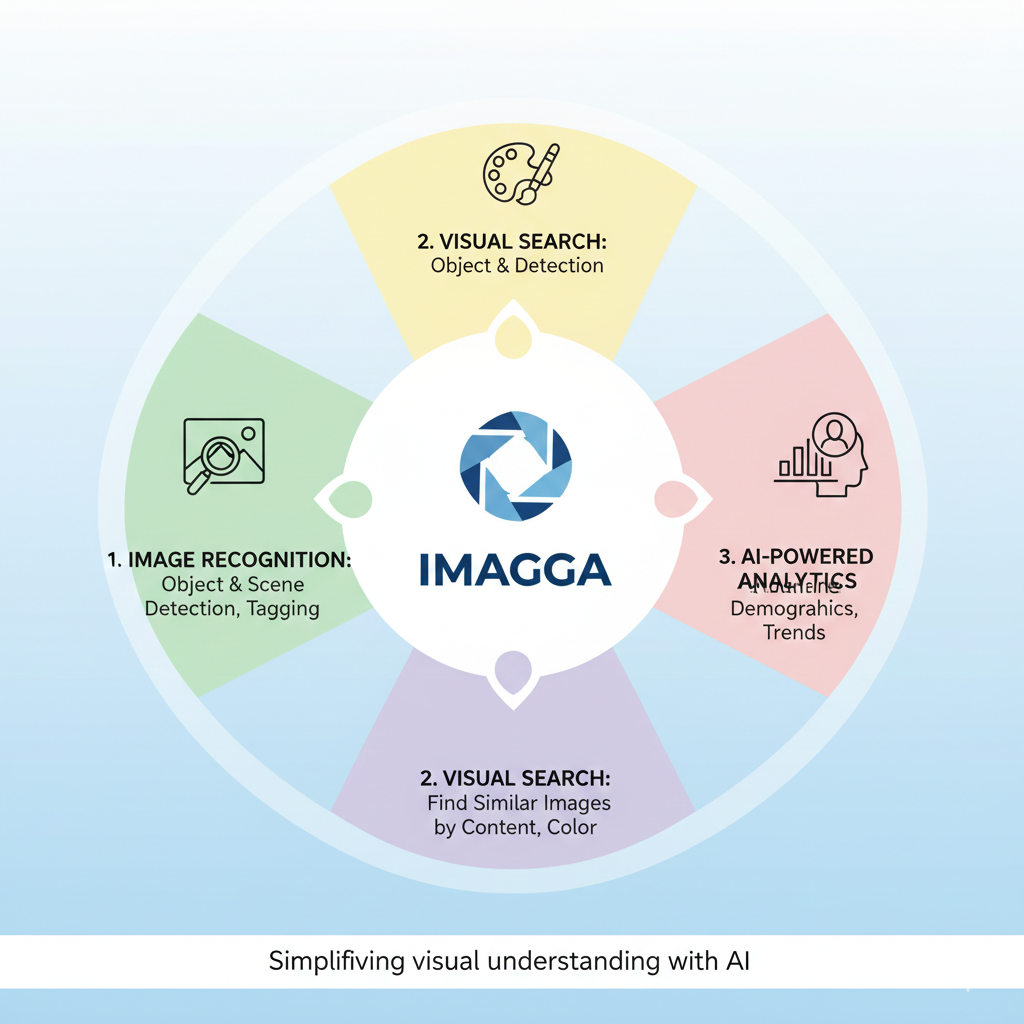
Artificial intelligence has dramatically changed the way machines “see” the world. AI image recognition is a branch of computer vision that enables software to identify objects, scenes, text, colors, and even emotions within images.
Instead of relying on manual tagging, AI models are trained on millions of labeled images to recognize patterns and make accurate predictions.
Today, image recognition systems can detect faces, classify products, filter inappropriate content, and even analyze medical scans with impressive precision.
The demand for automated image analysis is growing rapidly. According to industry reports, over 3.2 billion images are shared online every day, and e-commerce platforms alone host millions of product photos.
Manually organizing and reviewing this volume of visual content is nearly impossible.
Businesses need scalable solutions that can process thousands of images in seconds — not hours. This is where AI-powered image recognition tools become essential.
As visual content continues to dominate digital platforms, many companies are asking an important question: What is Imagga used for? Understanding this helps businesses see how AI can simplify image management, improve search functionality, and enhance user experience.
Instead of spending countless hours tagging images or moderating user-generated content, companies can automate these processes using intelligent APIs.
So, What is Imagga used for? Primarily, it helps businesses automatically tag, categorize, and analyze images through advanced machine learning models.
For example, an online fashion store can automatically detect whether a product image contains “shoes,” “leather,” or “red color” without human input. Similarly, social media platforms can use AI tools to flag inappropriate images instantly.
The reason businesses are increasingly adopting computer vision tools is simple: efficiency and accuracy.
Automated image recognition reduces operational costs, improves content discoverability, and enables smarter search experiences.
In a digital world driven by visuals, understanding What is Imagga used for? is the first step toward leveraging AI for smarter image management and business growth.
Also Read: What is the meaning of the word reap?
What is Imagga?
Imagga is a leading AI-powered image recognition platform that helps businesses automatically analyze and organize visual content.
Founded in 2013, the company specializes in computer vision technologies that allow machines to “understand” images the way humans do — but at a much larger scale.
As visual content continues to dominate the internet, tools like Imagga are becoming increasingly valuable for companies managing thousands or even millions of images.
At its core, Imagga provides advanced image recognition through artificial intelligence and deep learning. Its system is trained on millions of images to accurately detect objects, scenes, colors, and categories.
For example, an online marketplace can instantly identify whether a photo contains “sneakers,” “backpacks,” or “electronics” without manual tagging.
This dramatically reduces human effort and improves accuracy. When businesses ask, What is Imagga used for?, the simple answer is automation of image analysis — from tagging and categorization to content moderation.
One of Imagga’s biggest strengths is its cloud-based API services. Instead of installing complex software, developers can integrate Imagga’s APIs directly into their websites, apps, or platforms.
With just a few lines of code, companies can enable automatic image tagging, visual search, or even inappropriate content detection.
Cloud infrastructure also ensures scalability, meaning businesses can process a few hundred or millions of images without performance issues.
So, What is Imagga used for? It’s designed for both developers and businesses that rely heavily on visual content.
E-commerce platforms use it to improve product search, media companies use it to organize large photo libraries, and social platforms use it to moderate user-generated content.
In fact, studies show that visual search can increase conversion rates by up to 30% in retail environments.
Ultimately, when organizations explore What is Imagga used for?, they discover a practical, developer-friendly solution that saves time, reduces operational costs, and transforms how visual data is managed in the digital age.
More Read: How to Up My Unearther Level Fast: Smart Strategies for Quick Progress
What is Imagga Used For in Image Tagging?
One of the most powerful capabilities of modern image recognition tools is automatic keyword generation. Instead of relying on someone to manually describe every image, AI can instantly detect objects, scenes, colors, and even concepts within a photo.
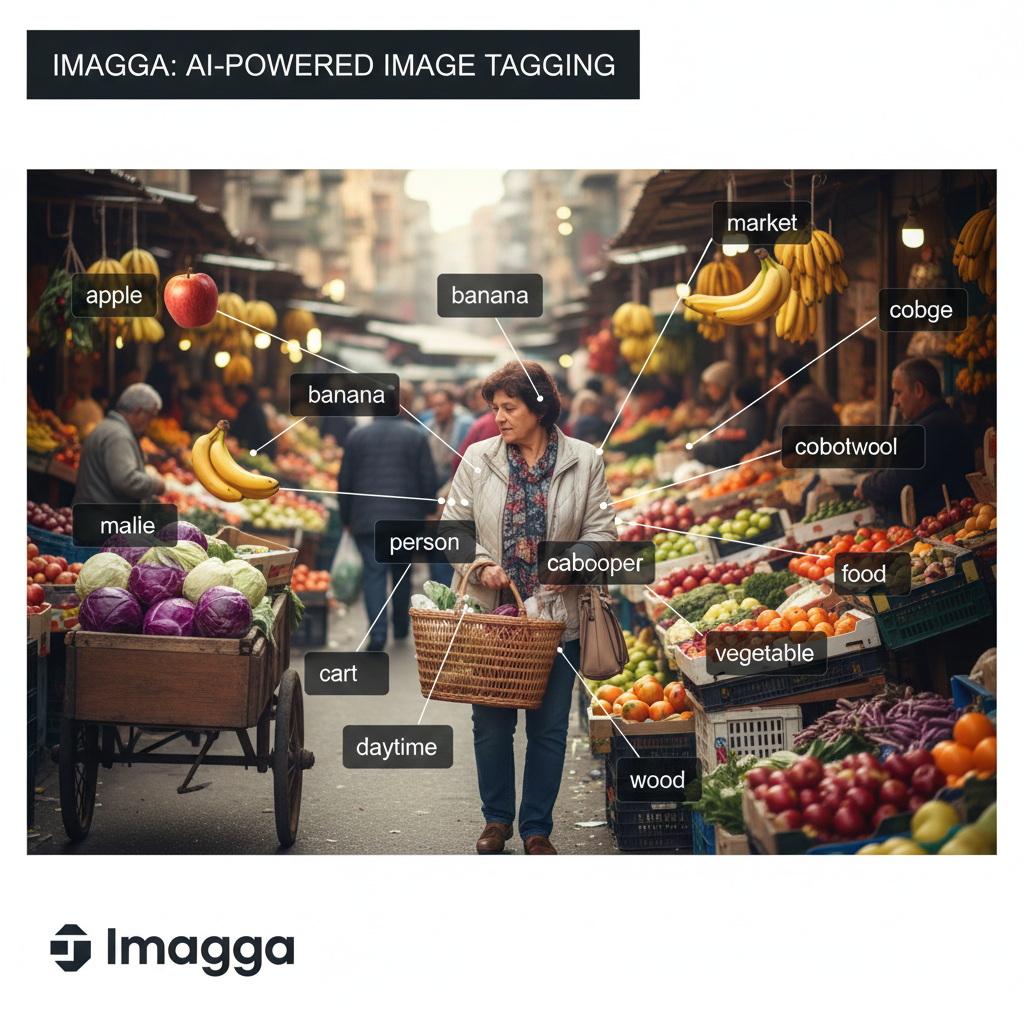
For example, if an image contains a beach, sunset, palm trees, and people, the system can automatically generate relevant keywords like “beach,” “sunset,” “vacation,” and “tropical.” This process happens in seconds, even when analyzing thousands of images at once.
This leads directly to smarter metadata creation for images. Metadata is the invisible information attached to an image — tags, categories, descriptions, and attributes — that makes it searchable and organized.
Without metadata, large image libraries quickly become chaotic and difficult to manage.
When businesses ask, What is Imagga used for?, one of the clearest answers is automated metadata generation at scale.
Instead of manually entering descriptions, companies can rely on AI to structure and enrich their visual content automatically.
Improved metadata significantly enhances searchability. Studies show that users are far more likely to engage with content when they can quickly find what they’re looking for.
In e-commerce, strong search functionality can increase conversion rates by up to 20–30%.
For instance, if a customer searches for “red running shoes,” the system can surface the exact products because the AI has already tagged those images accurately.
This makes digital platforms more intuitive and user-friendly.
Perhaps most importantly, automation saves enormous amounts of time. Manually tagging just 10,000 images could take weeks of human effort.
AI can process the same volume in minutes. So, What is Imagga used for? It helps businesses eliminate repetitive manual work while improving accuracy and consistency.
By reducing labor costs and minimizing human error, companies gain both efficiency and reliability.
In practical terms, understanding What is Imagga used for? reveals its value as a time-saving, accuracy-driven solution for managing large-scale visual content in today’s image-heavy digital landscape.
More Read: Is Github Copilot Free? Full Pricing & Eligibility Guide (2026)
What is Imagga Used For in E-commerce?
In the fast-moving world of online retail, managing thousands of product images efficiently is critical.
One major application of AI image recognition is product categorization. Instead of manually assigning items to categories, AI can analyze product photos and automatically classify them.
For example, a marketplace uploading 50,000 new items per day can instantly sort products into categories like “men’s sneakers,” “wireless headphones,” or “kitchen appliances.”
When businesses ask, What is Imagga used for?, product categorization is one of the most practical answers — it ensures inventory stays organized without constant human input.
Another powerful use case is visual product search. Modern consumers increasingly prefer searching with images rather than text.
In fact, studies show that over 60% of Gen Z shoppers favor visual search tools when browsing online stores. With AI-powered visual search, a customer can upload a photo of a jacket they like, and the system will display similar products available in the store.
So, What is Imagga used for? It enables retailers to match uploaded images with visually similar items, improving product discovery and reducing search friction.
AI also supports smart filtering systems. Beyond basic filters like size or price, computer vision can filter by visual attributes such as color, pattern, style, or material.
For example, shoppers can refine results to show only “red leather handbags” or “striped summer dresses.”
This level of precision helps customers find exactly what they want faster, which is crucial in a competitive e-commerce environment.
Ultimately, all these features contribute to enhancing the customer shopping experience. Faster searches, more accurate product matches, and organized catalogs create smoother user journeys.
Research consistently shows that better search experiences can increase conversion rates by up to 30%.
That’s why understanding What is Imagga used for? matters — it’s not just about image recognition; it’s about driving sales, improving usability, and creating a smarter, more engaging online shopping experience.
Also Read: Is Bylo Ai Free? Complete Guide to Pricing, Plans & Hidden Costs
What is Imagga Used For in Content Moderation?
As digital platforms grow, so does the challenge of monitoring user-generated content.
Every minute, millions of images are uploaded across social networks, forums, and marketplaces. Manually reviewing this volume is nearly impossible.
This is where AI-powered moderation becomes essential. When businesses ask, What is Imagga used for?, one of the most critical answers is detecting inappropriate content automatically and at scale.
AI systems can analyze images in real time to identify explicit or unsafe material.
Through NSFW (Not Safe for Work) filtering, platforms can flag or block adult content before it becomes publicly visible.
For example, online communities and dating apps rely on automated filtering to prevent explicit images from appearing in user feeds.
Studies show that automated moderation tools can reduce harmful content exposure by over 80% compared to manual-only review systems.
So, What is Imagga used for? It helps platforms maintain safer digital environments without overwhelming human moderators.
Beyond adult content, AI also supports violence detection. Computer vision models are trained to recognize weapons, blood, aggressive scenes, or disturbing imagery.
Social media platforms and online marketplaces use such tools to quickly identify and remove harmful visuals.
This is especially important for platforms operating in multiple countries, where content policies and regulations vary but user safety remains a priority.
Perhaps most importantly, AI moderation strengthens brand safety protection. Advertisers and businesses don’t want their brand associated with explicit, violent, or offensive content.
Automated image analysis helps ensure that ads and branded materials appear only alongside appropriate content.
For e-commerce sites, this also builds customer trust — shoppers are more likely to engage on platforms they perceive as safe and well-managed.
Ultimately, understanding What is Imagga used for? reveals its role as more than just a tagging tool.
It becomes a protective layer for digital businesses.
By combining NSFW filtering, violence detection, and real-time image analysis, companies can safeguard their reputation, comply with regulations, and create a secure user experience — all while reducing the cost and strain of manual moderation.
What is Imagga Used For in Digital Asset Management?
Managing large image libraries has become a serious challenge for modern businesses.
Media companies, e-commerce platforms, and enterprises often store hundreds of thousands — or even millions — of images.
Without structure, these assets quickly turn into digital clutter. This is where AI-powered organization plays a transformative role.
When companies ask, What is Imagga used for?, one major answer is efficiently organizing massive image databases.
Instead of manually sorting files into folders, AI can automatically analyze and group images based on objects, scenes, colors, and categories.
For example, a news agency storing 2 million photos can instantly classify images into topics like “sports,” “politics,” or “nature.” This eliminates the need for teams to review every file individually, saving both time and operational costs.
Another critical benefit is automating metadata. Metadata acts like a digital label that makes images searchable and structured.
AI can generate tags such as “conference,” “microphone,” or “audience” within seconds of upload. Research shows that employees spend nearly 20% of their time searching for information, including digital assets.
Automated metadata dramatically reduces this wasted time. So, What is Imagga used for? It ensures every image carries accurate, searchable information from the start.
With well-structured metadata, businesses achieve faster image retrieval. Instead of scrolling endlessly through folders, users can search specific keywords and instantly locate the exact image they need.
For marketing teams working under tight deadlines, this speed can significantly improve productivity and campaign turnaround time.
At the enterprise level, AI also enables advanced image sorting and categorization across departments and global teams.
Large organizations often require consistent tagging standards to maintain compliance and workflow efficiency.
Automated systems ensure uniform classification, reducing human error and inconsistencies.
Ultimately, understanding What is Imagga used for? highlights its value in enterprise digital asset management.
By organizing image libraries, automating metadata, and accelerating retrieval, businesses gain better control over their visual content — turning overwhelming image collections into structured, searchable, and highly valuable digital assets.
Key Features of Imagga
One of the main reasons businesses explore What is Imagga used for? is its powerful set of APIs designed to simplify image analysis at scale.
Instead of building complex computer vision systems from scratch, companies can integrate ready-made AI tools directly into their platforms.
The Auto-tagging API is one of the most widely used features. It automatically analyzes images and generates relevant keywords within seconds.
For example, if an image contains a “mountain,” “snow,” and “skier,” the API detects and assigns those tags instantly.
This is especially valuable for media libraries and e-commerce stores managing thousands of uploads daily. Studies show that automated tagging can reduce manual labeling time by up to 90%, significantly cutting operational costs.
Another important feature is the Categorization API. While tagging identifies objects, categorization places images into broader groups such as “travel,” “fashion,” or “technology.”
This structured classification makes content organization much more efficient. So when businesses ask, What is Imagga used for?, structured image categorization is a key part of the answer.
For companies with niche needs, custom model training adds flexibility. Businesses can train AI models on their own datasets to recognize specific products, brand elements, or industry-specific visuals.
For instance, a furniture retailer can train the system to distinguish between “modern,” “vintage,” and “minimalist” styles based on its catalog.
The color extraction feature is another practical tool. It identifies dominant colors within an image and provides exact color codes.
This is extremely useful in fashion and interior design industries, where customers often filter products by color preferences.
Finally, visual similarity search enhances user experience by finding images that look alike.
A shopper can upload a photo of a handbag, and the system will return visually similar products. Research indicates that visual search can boost engagement and conversions significantly in online retail.
Overall, understanding What is Imagga used for? means recognizing how these APIs — from auto-tagging to visual similarity search — help businesses automate, organize, and enhance visual content intelligently and efficiently.
Benefits of Using Imagga
One of the main reasons businesses adopt Imagga is its ability to deliver time-saving automation.
Manual image tagging, categorization, and moderation can take hours or even days, especially for large image libraries. With AI-powered automation, tasks that once required human teams can now be completed in seconds.
For example, an e-commerce platform uploading thousands of product photos daily can automatically tag and categorize them without manual effort.
This efficiency is a major reason companies ask, What is Imagga used for?
In addition to speed, Imagga offers high accuracy. Its AI models are trained on millions of images, enabling precise object detection, color recognition, and visual categorization.
According to industry benchmarks, automated image tagging systems can reach up to 95% accuracy, which not only improves searchability but also enhances the customer experience.
Accurate metadata ensures that users find exactly what they are looking for, boosting engagement and satisfaction.
Another advantage is easy API integration. Businesses don’t need to build complex computer vision systems from scratch.
Imagga’s APIs allow developers to integrate image recognition into websites, apps, or platforms with minimal coding.
This means teams can focus on improving user experience rather than managing technical infrastructure.
When organizations ask, What is Imagga used for?, the ease of integration is often highlighted as a key benefit.
Finally, Imagga is scalable for growing businesses. Whether a company manages hundreds of images or millions, the cloud-based platform can handle large workloads without performance issues.
This makes it suitable for startups, enterprises, and fast-growing digital platforms alike.
The combination of speed, accuracy, integration, and scalability is why understanding What is Imagga used for? is crucial — it’s a practical solution for managing visual content efficiently and reliably as a business grows.
Who Should Use Imagga?
Imagga’s versatility makes it valuable across a wide range of industries. E-commerce platforms are among the top users, as automatic image tagging, product categorization, and visual search help customers find products faster and improve conversion rates.
For instance, online fashion retailers can instantly classify thousands of new clothing images daily, ensuring a seamless shopping experience.
When businesses ask, What is Imagga used for?, supporting e-commerce operations is one of the clearest answers.
SaaS companies also benefit from Imagga’s AI-powered image recognition.
Platforms that manage digital content, cloud storage, or collaboration tools can integrate Imagga’s APIs to automate image organization, tagging, and search features.
This not only improves user efficiency but also adds value to their software offerings without requiring in-house computer vision expertise.
In the media and publishing sector, media & publishing houses rely on Imagga to manage enormous image libraries.
News agencies, stock photo platforms, and online magazines often deal with millions of visuals.
Automated metadata creation, categorization, and color detection help these organizations streamline workflow, speed up content discovery, and maintain consistency across their archives.
Finally, mobile app developers use Imagga to enhance user experiences in photo-centric applications.
From social media apps that filter inappropriate content to lifestyle apps that enable visual search, integrating Imagga’s APIs allows developers to offer intelligent image recognition features without building complex AI systems from scratch.
In all these cases, when stakeholders ask, What is Imagga used for?, the answer becomes clear: it’s a flexible, scalable solution that helps businesses across industries manage, analyze, and derive value from visual content efficiently.
By reducing manual work, increasing accuracy, and improving search and discovery, Imagga empowers companies to stay competitive in today’s visually-driven digital world.
Conclusion
In today’s digital world, understanding What is Imagga used for? is essential for businesses that deal with large volumes of visual content.
Imagga is an AI-powered image recognition platform that automates tasks such as image tagging, categorization, visual search, and content moderation.
From e-commerce platforms to media houses, and SaaS companies to mobile apps, its capabilities help organizations save time, improve accuracy, and enhance user experiences.
Features like auto-tagging APIs, custom model training, and visual similarity search make managing even millions of images fast, efficient, and scalable.
The growing reliance on visual content means that AI-powered image recognition is becoming essential.
Platforms that fail to implement intelligent image management risk slower workflows, inconsistent metadata, and missed opportunities for search and discovery.
Research shows that automated image analysis can reduce manual effort by up to 90% while maintaining high accuracy, proving that AI is not just a convenience but a strategic necessity for digital-first businesses.
In conclusion, What is Imagga used for? goes beyond simple automation — it’s about transforming how businesses handle images.
By leveraging Imagga, companies can organize large image libraries, improve searchability, enhance customer experiences, and maintain brand safety.
If your business is managing visual content at scale, integrating Imagga’s AI-powered tools is a smart step toward efficiency and growth.
Start exploring how Imagga can optimize your image workflows and take your digital strategy to the next level.