
The murder of Tara Knowles in Sons of Anarchy left fans reeling, marking one of the darkest and most emotionally devastating moments in the show’s history.
For viewers who had followed Tara’s journey from a strong, compassionate doctor to a mother caught in the chaos of SAMCRO, her death was not just shocking—it was heartbreaking.
The scene’s intensity, combined with the raw emotional performances, ensured it became one of the most talked-about television deaths of all time, frequently discussed in fan forums, reviews, and retrospectives even years after it aired.
At the heart of this tragedy lies a question that has haunted fans ever since: why did gemma kill tara? Unlike many violent acts in the series that were tied directly to club business, Tara’s death was personal, rooted in fear, misunderstanding, and a complex web of loyalty and control.
Gemma Teller Morrow, always fiercely protective of her son Jax and the family legacy of SAMCRO, saw Tara’s choices—cooperating with authorities and planning to take her children away—as a direct threat.
In Gemma’s eyes, Tara was not just leaving; she was betraying the family, and that perception, fueled by misinformation, led to the fateful confrontation.
This single act didn’t just end Tara’s life; it reshaped the trajectory of the entire series. Jax Teller’s character, already burdened with grief and responsibility, was pushed further into a spiral of vengeance and recklessness.
The dynamics within the club shifted dramatically, trust eroded, and the Teller family’s stability fractured irreparably.
By killing Tara, Gemma inadvertently set off a chain reaction that dictated the events of the final season, turning personal loss into a driving force for revenge, chaos, and tragedy.
Understanding why did gemma kill tara requires looking beyond the act itself and into Gemma’s psychology: her fear of losing control, her deep maternal instincts, and her perception that eliminating Tara was the only way to protect her family.
In this context, her actions, while horrifying, reveal the tragic intersection of love, fear, and the destructive influence of the violent world in which the characters live.
Tara’s death remains a defining moment, illustrating how a single choice, driven by emotion and misjudgment, can irrevocably alter lives.
More Read: Is Github Copilot Free? Full Pricing & Eligibility Guide (2026)
The Long-Standing Power Struggle Between Gemma and Tara
The relationship between Gemma Teller Morrow and Tara Knowles was never simple. On the surface, both women loved Jax Teller deeply, but their approaches to life and loyalty were fundamentally different, creating a tension that simmered throughout the series.

Gemma’s world revolved around SAMCRO—the motorcycle club was not just an organization but the center of her identity.
Her loyalty was absolute, and she measured every decision through the lens of protecting the club and preserving the family legacy.
Tara, by contrast, prioritized survival and safety. She saw the dangers of the outlaw lifestyle up close and understood that the club’s violent world could destroy her children and her family’s future.
While Gemma wanted to hold everything together through control and influence, Tara sought escape, planning a life where Abel and Thomas could grow up without the shadow of SAMCRO hanging over them.
Their differing priorities inevitably set them on a collision course, even though both acted out of love for Jax.
Over multiple seasons, small moments of jealousy, distrust, and competition gradually escalated. Gemma viewed Tara’s independence and moral compass as a threat, while Tara grew increasingly frustrated with Gemma’s manipulations and dominance.
From arguments over Jax’s attention to disagreements about the children’s future, the tension built steadily, layer by layer.
By the time the pivotal Season 6 finale arrived, the conflict between them was not sudden—it was the tragic result of years of clashing values, unspoken resentments, and diverging visions for Jax’s life and the children’s future.
In understanding why Gemma killed Tara, this history is crucial. Their layered relationship and opposing worldviews made confrontation inevitable, and it was Gemma’s inability to reconcile loyalty with love that turned tragedy into reality.
The emotional weight of their dynamic is what makes Tara’s death not just shocking, but profoundly heartbreaking.
More Read: Is Bylo Ai Free? Complete Guide to Pricing, Plans & Hidden Costs
Tara’s Breaking Point: Choosing Survival Over Loyalty
By Season 6 of Sons of Anarchy, Tara Knowles was facing immense legal pressure that weighed heavily on her and the children.

As a key figure tied to SAMCRO’s criminal activities, Tara risked being implicated in crimes she hadn’t directly committed but was connected to by association.
The threat of prison loomed large, and with it came the possibility of losing Abel and Thomas—her greatest priorities. For Tara, every decision had to balance survival, her children’s safety, and her moral compass.
Faced with this danger, Tara considered cooperating with authorities as a last resort. Witness protection offered her a chance to remove the boys from the club’s violent world and secure a future free from the constant threat of retaliation.
While this plan was practical and grounded in concern for her family, it carried enormous emotional consequences.
Tara wasn’t betraying SAMCRO out of malice; she was making the difficult choice to protect her children from a life of violence, imprisonment, and instability.
From Gemma’s perspective, however, Tara’s attempt to leave Charming represented the ultimate betrayal.
Gemma equated loyalty to the club with loyalty to the family, and Tara’s cooperation with law enforcement directly threatened the legacy Gemma had spent her life preserving.
Tara’s plan meant severing ties, escaping Gemma’s influence, and challenging the power dynamic within the Teller family.
Her actions were rational, measured, and motivated by love—but they undermined Gemma’s identity as the matriarch and protector.
Understanding this tension is key to answering the question: why did gemma kill tara. Tara’s legal struggles and her protective instincts collided with Gemma’s fear of losing control, creating a situation where Gemma misinterpreted love and protection as betrayal.
Tara’s attempt to secure a safer future for her children inadvertently placed her in Gemma’s crosshairs, setting the stage for one of the most tragic events in television history.
Also Read: How to Use Dall-e 2: A Beginner’s Step-by-Step Guide
The Lie That Sparked the Tragedy
One of the most critical factors in Tara’s tragic death was the role of Juice Ortiz, whose misinformation set the stage for disaster.
Juice, desperate to protect himself and fearful of the club’s wrath, fed Gemma false information suggesting that Tara had made a legal deal with the authorities.
Though his intentions were self-serving, the impact was devastating: Gemma immediately interpreted the lie as confirmation of betrayal.
In Gemma’s mind, Tara’s supposed deal meant three catastrophic outcomes. First, she believed Tara had officially turned on the family.
Second, she feared Jax would be sent to prison for life, removing him from the very club and family she had worked so hard to control.
Third, Gemma imagined the collapse of SAMCRO itself, a terrifying thought for someone whose identity was inseparable from the club. Each of these perceived threats compounded her anxiety and pushed her closer to a tragic decision.
What makes this situation even more poignant is that Gemma never sought confirmation. She acted purely on fear and assumption, convinced of the worst without pausing to verify facts.
This unverified belief magnified her paranoia and fueled her impulsive response, turning what might have been a preventable confrontation into an irreversible tragedy.
Fear played a magnifying role in this moment. Gemma’s lifelong obsession with control and her instinct to protect Jax and the family created a lens through which even small lies appeared as existential threats.
Juice’s deception, combined with Gemma’s emotional volatility, transformed misunderstanding into catastrophe.
This moment became the irreversible turning point in the series, answering the central question: why did gemma kill tara.
It wasn’t just a sudden act of violence—it was the culmination of fear, misinformation, and a deeply ingrained need to preserve her vision of family at any cost.
The consequences of that single lie rippled through the final season, forever changing the lives of everyone in the Teller family.
More Read: How Much Does 10Web Cost?
Gemma’s Psychology: Protection, Possession, and Fear of Irrelevance
Gemma Teller Morrow’s actions in Sons of Anarchy can be better understood by examining her deeply complex personality traits.
She was a woman defined by dominance, wielding control over both the club and her family with an iron will.
Her ability to manipulate emotionally was second nature—Gemma often used guilt, fear, and loyalty to bend others to her desires, particularly Jax.
Beneath this strength, however, lay an intense fear of abandonment. Losing those she loved—or losing her central place in their lives—was a threat she could not tolerate.
As the matriarch of SAMCRO, Gemma’s identity was inseparable from her role in the club. She wasn’t just a mother or grandmother; she was the glue holding the Teller family and the club’s legacy together.
Her influence shaped decisions, protected the family’s secrets, and ensured that SAMCRO operated according to her vision.
Losing her grandchildren would have felt catastrophic, not merely emotionally but existentially, stripping her of the purpose she had built her life around.
When considering why did gemma kill tara, it’s clear that her actions straddled a line between love and ego.
On one hand, she believed she was protecting her family from betrayal and danger; on the other, her need for control and dominance drove her to act impulsively and violently.
Tara’s independence represented a direct threat to Gemma’s carefully constructed world. A mother leaving her children with another woman, outside the influence of the matriarch, was a loss Gemma could not bear.
Ultimately, her identity was built on control—control over Jax, the club, and the family legacy. Tara’s attempts to carve out a safer, independent life for her children collided with Gemma’s vision, igniting fear and anger.
Whether driven by love or ego, the result was the same: a catastrophic decision that answered the haunting question of why did gemma kill tara and underscored the tragic consequences of a personality defined by power, fear, and an unyielding need to protect at any cost.
More Read: Is Photor AI Free? What You Can (and Can’t) Do Without a Credit Card
The Confrontation: Impulsive Violence, Not Calculated Murder
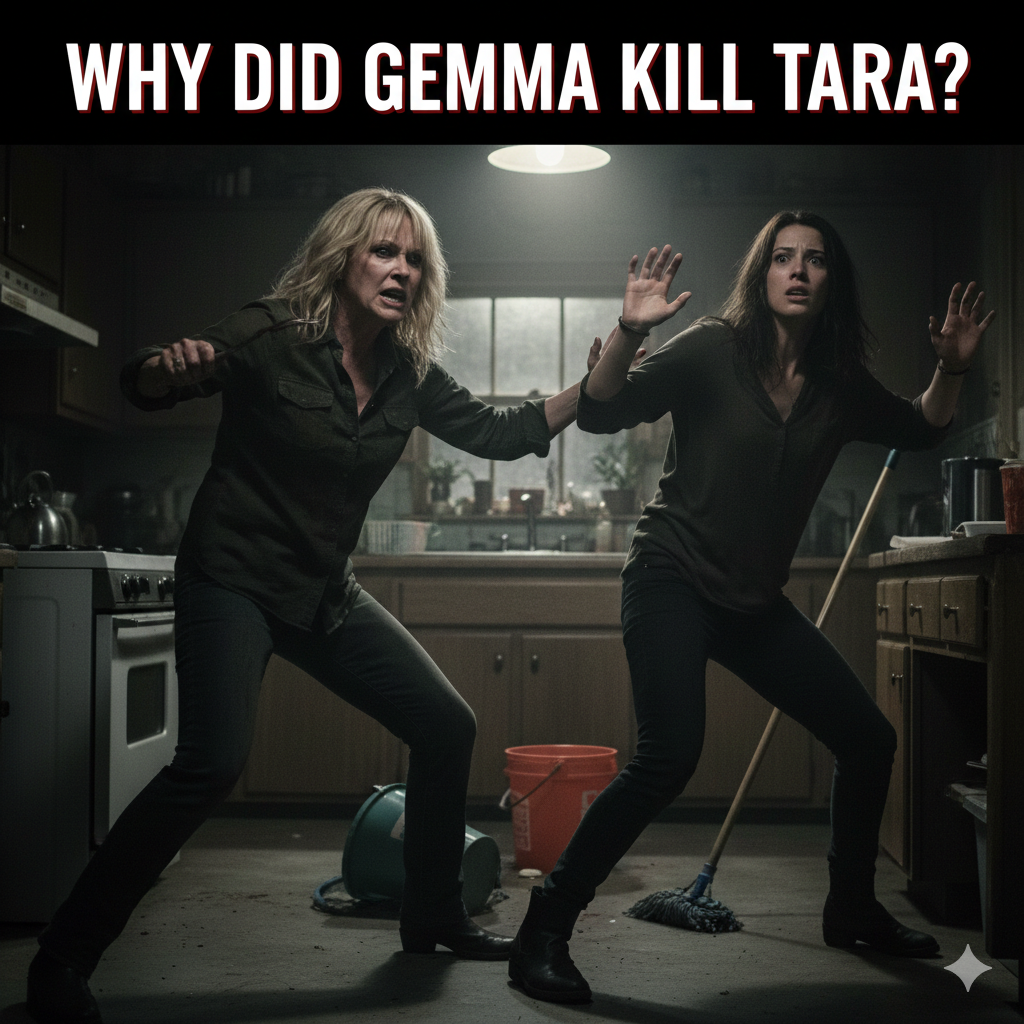
The confrontation in Tara’s kitchen remains one of the most harrowing moments in Sons of Anarchy. What began as a tense discussion quickly escalated into a chaotic, emotional explosion.
Gemma’s fear, anger, and sense of betrayal collided, and the calm veneer she sometimes maintained crumbled entirely.
Every word, glance, and accusation fed into a spiral of panic that neither woman could control.
It’s important to note that this was not a planned hit orchestrated by SAMCRO. Unlike other violent acts in the series, Tara’s murder was deeply personal and impulsive.
There were no club orders, no calculated strategy—just Gemma, overwhelmed by fear and a perceived threat, acting in the moment.
Alcohol and years of emotional instability played a significant role in intensifying the situation.
Gemma had long relied on control and manipulation to navigate the volatile world around her, but in the kitchen, her judgment was clouded.
Alcohol lowered her inhibitions, while accumulated stress, paranoia, and anxiety magnified every perceived insult or betrayal.
Once panic took hold, it became a self-reinforcing cycle. Every defensive reaction, every attempt to assert control, escalated the violence further.
By the time the act concluded, there was no turning back. The brutality of the scene wasn’t strategic—it was the physical manifestation of emotional collapse, a raw expression of fear, anger, and desperation.
In examining why did gemma kill tara, this moment illustrates that the act was less about calculation and more about an uncontrollable emotional storm.
The violence reflected Gemma’s internal chaos, showing that even someone as strong and commanding as the matriarch could be undone when fear and grief override reason.
Tara’s kitchen became the stage for a tragedy born not of strategy, but of human vulnerability taken to its devastating extreme.
The Tragic Irony: Tara Wasn’t the Villain
The most heartbreaking truth about Tara’s death in Sons of Anarchy is that she wasn’t trying to destroy Jax Teller.
Every action Tara took—cooperating with authorities, planning to leave Charming—was motivated by a single, unwavering goal: protecting her children, Abel and Thomas, from the violent, unpredictable world of SAMCRO.
Her choices were rational, selfless, and grounded in love.
Yet misunderstanding turned love into tragedy. Gemma Teller Morrow interpreted Tara’s intentions through a lens of fear and control, convinced that Tara’s departure threatened the family and the club.
That misreading destroyed any possibility of reconciliation. Even if Tara had tried to explain, the seeds of distrust and accumulated resentment made communication nearly impossible.
The tragic miscommunication between the two women highlights one of the series’ central themes: how perception, rather than reality, can dictate irreversible outcomes.
Gemma’s actions, fueled by fear, ensured that her worst nightmare came true. In attempting to “protect” her family, she destroyed it.
By eliminating Tara, Gemma not only silenced the voice of reason and love but also fractured the very foundation of the Teller family.
Her fear of losing control over Jax and the children was so consuming that it blinded her to the truth—ultimately causing the loss she had dreaded most.
In answering the haunting question why did gemma kill tara, it becomes clear that the act was not motivated by malice but by a tragic combination of fear, misjudgment, and the inability to trust.
Tara’s death stands as a devastating reminder of how misunderstanding and unchecked emotion can turn love into irreversible tragedy, forever altering the lives of those involved.
The Domino Effect: How Tara’s Death Changed Everything
When Jax Teller finally learns the truth about Tara’s death, the impact is catastrophic. The grief he feels is immediate and all-consuming, but it quickly transforms into something darker: vengeance.
Jax, already burdened by the violence and moral compromises of his life in Sons of Anarchy, channels his pain into a relentless drive to punish those responsible.
Tara’s death becomes the catalyst for decisions that are increasingly reckless, propelling him further down a path of violence that the series has been building toward for years.
The repercussions extend far beyond Jax’s personal transformation. Tara’s death accelerates the collapse of SAMCRO itself.
Trust within the club erodes, alliances fracture, and internal conflicts intensify. Decisions that might have been cautious or strategic are instead fueled by raw emotion, destabilizing the organization from within.
What was once a tightly knit family and club begins to unravel under the weight of betrayal, grief, and revenge.
Meanwhile, Gemma Teller Morrow begins to unravel under the pressure of guilt and paranoia.
The woman who once wielded absolute control over her family and the club finds herself trapped by her own actions.
Every interaction, every secret she tries to maintain, becomes a reminder of the irreversible consequences of her choice.
Her emotional and psychological deterioration mirrors the chaos engulfing the club and her son, highlighting how one impulsive act can trigger widespread devastation.
In this way, Gemma’s killing of Tara doesn’t just eliminate a character—it seals the tragic arc of the series.
The Teller family, Jax, and SAMCRO are all irrevocably changed. Loss, revenge, and the destructive power of fear and control become central to the final season, demonstrating how a single, emotionally charged decision can ripple outward, shaping the fate of everyone involved.
The answer to why did gemma kill tara thus encapsulates the series’ exploration of love, loyalty, and the deadly consequences of misjudgment.
Themes Explored Through Tara’s Death
Tara’s death in Sons of Anarchy brings several of the show’s central themes into sharp focus. One of the most compelling contrasts is family versus freedom.
Tara wanted to escape the violent life of SAMCRO to protect her children, prioritizing safety and autonomy over the club’s demands.
Gemma, on the other hand, equated loyalty to the family with loyalty to the club, seeing any move toward independence as a threat.
Their clash illustrates how the definition of “family” can vary dramatically depending on perspective.
Closely tied to this is the tension between loyalty and survival. Tara’s willingness to cooperate with authorities wasn’t betrayal—it was a pragmatic choice to ensure survival for herself and her children.
Gemma perceived it as a violation of loyalty, highlighting how rigid codes of allegiance can clash with basic instincts to protect life.
The tragedy also reflects love twisted into control. Gemma’s actions were framed as maternal protection, but in reality, they stemmed from a desperate need to dominate and preserve her authority.
Her version of love was inseparable from control, and Tara’s attempts to act independently became an existential threat to Gemma’s sense of purpose.
Another key theme is the consequences of acting on misinformation. The lie fed to Gemma by Juice Ortiz magnified her fears, showing how a single falsehood, when filtered through strong emotions and personal insecurities, can lead to irreversible tragedy.
Miscommunication and false assumptions turned fear into action, leaving no room for dialogue or reason.
Finally, Tara’s death exemplifies the cycle of violence consuming its own. SAMCRO’s world is one where revenge, fear, and loyalty perpetuate destruction.
By killing Tara, Gemma not only destroyed a life but also set off a chain reaction that devastated the club, her son Jax, and ultimately herself.
The series uses this moment to show how violence, even when framed as protection, inevitably destroys those it claims to safeguard.
In exploring these themes, the question why did Gemma kill tara becomes more than a plot point—it’s a lens through which the show examines human flaws, loyalty, and the devastating cost of misjudgment.
Final Reflection: Why Did Gemma Kill Tara?
Revisiting the central question, why did gemma kill tara, it becomes clear that the answer lies in a complex mix of fear, misunderstanding, and emotional impulsivity.
Gemma’s decision was not born out of malice alone, but from a layered combination of factors that made the tragedy almost inevitable.
First, she believed a lie. Juice Ortiz’s false information convinced her that Tara had betrayed Jax and the club, setting off a chain reaction of mistrust and panic.
Gemma never confirmed the facts, and that single misperception magnified her fears.
Second, she feared losing Jax and the boys. Her identity and sense of purpose were deeply entwined with her role as the matriarch of the Teller family and SAMCRO.
The idea of Tara taking her grandchildren away was unbearable, threatening not just her control, but her emotional anchor.
Third, Gemma couldn’t surrender control. Years of dominance, emotional manipulation, and insistence on loyalty had made her world revolve around maintaining influence over those she loved.
Tara’s independence was interpreted as rebellion, a direct challenge to everything Gemma had built her life around.
Finally, she acted in panic. In the chaos of the kitchen confrontation, fear and emotional overload overrode rational thought.
What might have been a preventable tragedy became irreversible because Gemma responded impulsively rather than cautiously.
In sum, the answer to why did gemma kill tara is a tragic combination of deception, fear, control, and impulsive action.
It wasn’t a calculated crime—it was the devastating result of love and loyalty twisted by misunderstanding and human frailty.